Best Lens Kit Mirrorless Cameras: 15 Spec-Based Picks
As an Amazon Associate we earn from qualifying purchases. Links on this page are affiliate links.
Finding the best lens kit mirrorless cameras requires balancing sensor size, body dimensions, and bundled optics. This comparison ranks 15 models based strictly on the specifications published on their listings. The Canon EOS Rebel T7 with 18-55mm Lens leads the list with its 24.1MP APS-C sensor and included 18-55mm lens.
Options range from Micro Four Thirds to full-frame sensors, with package weights spanning 15.2 ounces to 3.7 pounds. This guide helps you decide which sensor format, video resolution, and lens kit best fit your photography goals.
Quick picks
The best fit for you
- You want a bundled APS-C setup for casual stills Canon EOS Rebel T7 with 18-55mm Lens You get a 24.1MP APS-C sensor paired with an included 18-55mm lens for everyday still photography.
- You need a full-frame sensor for 4K video Canon EOS R8 Full-Frame Camera Its 24.2 MP full-frame sensor delivers 4K 60p recording and 1,053 autofocus zones.
- You want high-speed 4K 120p video recording capabilities Sony Alpha a6700 with 16-50mm Lens You get a 26.0MP APS-C sensor with 4K 120p 10-bit capture and dedicated AI tracking.
- You prioritize maximum stabilization for handheld shooting situations OM System OM-3 Micro Four Thirds Kit Its Micro Four Thirds system delivers 7.5 EV image stabilization alongside integrated ND filters.
Our 15 picks

Canon EOS Rebel T7 with 18-55mm Lens
Best for: bundled entry-level APS-C still photography
- Configuration
- Lens Kit (what this guide is about)
- Sensor Format
- APS-C
- Sensor Resolution
- 24.1MP
- Burst Shooting Speed
- 3 fps
- Autofocus System
- 9-point AF System, AI Servo AF
- Video Resolution
- Full HD 1080p at 30 fps
This bundle centers on an APS-C camera paired with an EF-S 18-55mm f/3.5-5.6 lens and accessories. You get a 24.1-megapixel CMOS sensor, DIGIC 4+ processor, and an optical 3.0x zoom range for everyday stills. The setup includes built-in Wi-Fi with NFC and a 3.0-inch 920k-dot LCD screen. It suits you if you need a straightforward starter kit with basic Full HD 1080p video recording and guided shooting modes.
Pros
- 24.1MP APS-C CMOS sensor
- Includes 18-55mm lens, 128GB card, and tripod bundle
- Built-in Wi-Fi and NFC connectivity
- 3.0-inch 920k-dot LCD monitor
Cons
- Continuous shooting speed capped at 3 fps
- Autofocus limited to 9 points
- Video recording maxes out at Full HD 1080p at 30 fps
Good fit if
- You want a complete kit containing an 18-55mm lens, tripod, and memory card.
- You prioritize 24.1MP still photography over high-speed action.
- You need built-in Wi-Fi and NFC for direct wireless photo sharing.
Skip if
- You need continuous burst shooting faster than 3 fps.
- You require 4K video capture instead of 1080p at 30 fps.
- You need an autofocus system with more than 9 focus points.
Verdict: Canon EOS Rebel T7 with 18-55mm Lens gives you an entry-level APS-C platform centered on a 24.1MP sensor and bundled support gear. Its 9-point autofocus and 3 fps burst speed make it best suited for casual stills rather than action.

Canon EOS Rebel T7 with 18-55mm Lens Kit
Best for: entry-level still photography with bundle accessories
- Configuration
- Lens Kit (what this guide is about)
- Sensor Format
- APS-C
- Sensor Resolution
- 24.1MP
- Burst Shooting Speed
- 3 fps
- Autofocus System
- 9-point AF System, AI Servo AF
- Video Resolution
- Full HD 1080p at 30 fps
This kit pairs the Canon EOS Rebel T7 body with an EF-S 18-55mm lens and accessory bundle. You get a 24.1MP APS-C sensor, a DIGIC 4+ processor, and built-in Wi-Fi with NFC. The camera captures Full HD 1080p video at 30 fps and shoots bursts at 3 fps. It suits you if you want a high-resolution starter setup with included memory and lenses for immediate shooting.
Pros
- 24.1MP APS-C CMOS sensor
- Built-in Wi-Fi and NFC connectivity
- Includes 18-55mm lens and 128GB memory card
- 3.0-inch 920k-dot LCD screen
Cons
- Burst rate limited to 3 fps
- 9-point autofocus system
- Video resolution tops out at Full HD 1080p at 30 fps
Good fit if
- You need a complete starter kit with lenses, tripod, and 128GB storage.
- You prioritize 24.1MP still photography over high-speed action.
Skip if
- You need 4K video recording.
- You shoot fast action requiring more than 3 fps continuous shooting.
Verdict: Canon EOS Rebel T7 with 18-55mm Lens Kit provides a 24.1MP APS-C sensor and extensive accessories for everyday photography. Its 3 fps burst rate and 1080p video limit fast-paced performance.

Canon EOS Rebel T7 18-55mm Lens Kit
Best for: entry APS-C stills and webcam streaming
- Configuration
- Lens Kit (what this guide is about)
- Sensor Format
- APS-C
- Sensor Resolution
- 24.1 Megapixel
- Autofocus System
- 9-Point AF system and AI Servo AF
- Video Resolution
- FHD 1080p
- ISO Sensitivity
- 100–6400 (H: 12800)
This Canon EOS Rebel T7 kit pairs a 24.1-megapixel APS-C sensor with an 18-55mm zoom lens. You get Full HD 1080p video capture, an optical viewfinder offering 95 percent frame coverage, and built-in Wi-Fi with NFC for wireless transfers. Its native ISO ranges from 100 to 6400. This setup suits you if you want a straightforward APS-C kit for stills and webcam streaming.
Pros
- 24.1-megapixel APS-C CMOS sensor
- Built-in Wi-Fi and NFC connectivity
- Compatible with EOS Utility Webcam Beta Software
- Includes 18-55mm kit lens
Cons
- Video resolution tops out at FHD 1080p with no 4K listed
- Optical viewfinder coverage is limited to 95 percent
- Hardware autofocus limited to a 9-point AF system
Good fit if
- You need an APS-C camera kit with an included 18-55mm lens.
- You want built-in Wi-Fi and NFC for transferring files.
- You plan to use your camera as a computer webcam.
Skip if
- You require 4K video capture instead of FHD 1080p.
- You need a viewfinder with 100 percent frame coverage.
- You want a dense autofocus array beyond 9 points.
Verdict: Canon EOS Rebel T7 18-55mm Lens Kit provides a 24.1-megapixel APS-C imaging setup with standard 1080p video and wireless transfer tools. It delivers core photographic controls without higher-tier features like 4K recording.
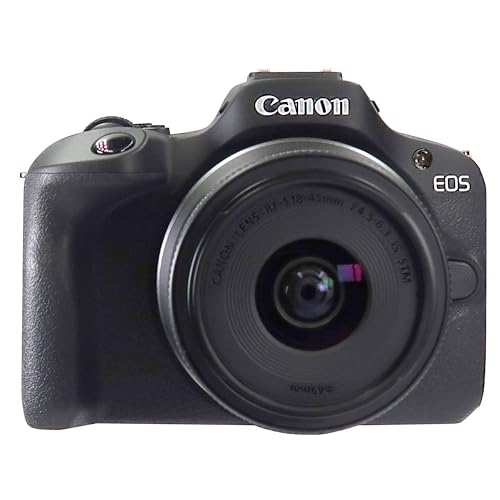
Canon EOS R100 Renewed Lens Kit
Best for: entry-level mirrorless still photography
- Configuration
- Lens Kit (what this guide is about)
- Sensor Format
- APS-C
- Sensor Resolution
- 24.1MP
- Autofocus System
- Dual Pixel CMOS AF
- Video Resolution
- 4K at 24 fps
- Image Processor
- DIGIC 8
This renewed Canon EOS R100 lens kit pairs a 24.1MP APS-C CMOS sensor with a DIGIC 8 image processor and an RF-S 18-45mm lens. You get Dual Pixel CMOS autofocus featuring eye and face detection, alongside Full HD recording at 60 fps and cropped 4K capture at 24 fps. Built-in Wi-Fi and Bluetooth handle wireless transfers. It suits you if you want a compact APS-C setup for everyday photography.
Pros
- 24.1MP APS-C CMOS sensor with DIGIC 8 processor
- Dual Pixel CMOS autofocus with face and eye detection
- Bundled RF-S 18-45mm F4.5-6.3 IS STM zoom lens
- Built-in Wi-Fi and Bluetooth connectivity
Cons
- 4K video capture is cropped and limited to 24 fps
- Full HD video tops out at 60 fps
- Refurbished unit rather than brand-new factory inventory
Good fit if
- You want an APS-C sensor with eye and face detection autofocus.
- You need a bundled 18-45mm starter zoom lens.
- You plan to transfer photos wirelessly via Wi-Fi or Bluetooth.
Skip if
- You need uncropped 4K video recording or frame rates higher than 24 fps in 4K.
- You require brand-new factory hardware rather than a renewed camera.
Verdict: Canon EOS R100 Renewed Lens Kit delivers a 24.1MP APS-C sensor and responsive Dual Pixel autofocus in an accessible package. It offers reliable still photography specs and wireless sharing, though video creators face a crop when shooting 4K.

Canon EOS R50 with 18-45mm Lens Kit
Best for: compact everyday shooting and fast autofocus tracking
- Configuration
- Lens Kit (what this guide is about)
- Sensor Format
- APS-C
- Sensor Resolution
- 24.2 Megapixel
- Burst Shooting Speed
- Up to 15 fps
- Autofocus System
- Dual Pixel CMOS AF II, 651 AF zones
- Video Resolution
- 4K at up to 30 fps
The Canon EOS R50 pairs an 18-45mm zoom lens with a 24.2-megapixel APS-C sensor and DIGIC X processing. You get uncropped 4K video recording up to 30 fps, continuous shooting reaching 15 fps using the electronic shutter, and 651 autofocus zones with subject tracking. A vari-angle touchscreen and 2.36-million-dot electronic viewfinder suit you if you want a compact setup for everyday stills and video capture.
Pros
- Dual Pixel CMOS AF II with 651 zones and subject tracking
- Continuous burst shooting up to 15 fps with electronic shutter
- Uncropped 6K-oversampled 4K video recording up to 30 fps
- Vari-angle touchscreen LCD and 2.36-million-dot electronic viewfinder
Cons
- Included lens has a relatively slow f/4.5-6.3 maximum aperture
- Video recording in 4K resolution is capped at 30 fps
Good fit if
- You want uncropped 4K video paired with automated subject tracking.
- You need fast burst speeds reaching 15 fps for moving action.
- You prefer framing from diverse angles using a vari-angle touchscreen.
Skip if
- You need 4K capture at 60 fps or higher.
- You require a kit lens with a wider aperture than f/4.5.
Verdict: Canon EOS R50 with 18-45mm Lens Kit delivers fast 15 fps burst capture, intelligent autofocus, and uncropped 4K video in a lightweight one-pound package. It offers reliable APS-C imaging performance if you want capable photo and video features in a compact body.

Canon EOS R8 Full-Frame Camera
Best for: Full-frame photo and video creators
- Configuration
- Lens Kit (what this guide is about)
- Sensor Format
- Full-frame
- Sensor Resolution
- 24.2 MP
- Autofocus System
- Dual Pixel CMOS AF II (1,053 AF zones)
- Video Resolution
- 4K up to 60 fps, Full HD up to 180 fps
- Image Processor
- DIGIC X
The Canon EOS R8 paired with the RF 24-50mm lens gives you a 24.2-megapixel full-frame sensor and the DIGIC X image processor in a compact setup. It offers uncropped 4K video recording up to 60 fps oversampled from 6K, along with Full HD at 180 fps. Dual Pixel CMOS AF II covers the entire frame across 1,053 zones, making this kit suitable if you need advanced full-frame tracking.
Pros
- 24.2 MP full-frame sensor with DIGIC X processor
- Uncropped 4K video at 60 fps oversampled from 6K
- Dual Pixel CMOS AF II with 1,053 zones and deep learning detection
- High-speed Full HD recording up to 180 fps
- Vari-angle 3.0-inch touchscreen and 120 fps OLED EVF
Cons
- Kit lens maximum aperture narrows to f/6.3 at 50mm
- Modest 24-50mm zoom range on the included kit lens
- Continuous movie recording capped at two hours
Good fit if
- You want full-frame sensor performance in a lightweight mirrorless kit.
- You need uncropped 4K 60p video or high-frame-rate capture up to 180 fps.
- You require Canon Log 3 or HDR PQ color recording for video production.
Skip if
- You need a wider kit lens zoom range beyond 50mm.
- You shoot in dim conditions and need an aperture wider than f/4.5-6.3.
Verdict: Canon EOS R8 Full-Frame Lens Kit delivers a 24.2 MP full-frame sensor, 4K 60p capture, and 1,053 autofocus zones in a ready-to-shoot package. It provides the largest sensor size among the options on this list.

OM System OM-3 Micro Four Thirds Kit
Best for: stabilized handheld shooting with integrated ND filters
- Configuration
- Lens Kit (what this guide is about)
- Sensor Format
- Micro Four Thirds
- Sensor Resolution
- 20MP
- Image Stabilization
- IBIS up to 7.5 EV Steps
- Color
- Silver
- Dimensions
- 11.3 × 7 × 5.25 inches
This mirrorless kit pairs the OM System OM-3 body with an M.Zuiko Digital ED 12-45mm F4.0 PRO zoom lens. You get a 20MP stacked BSI Live MOS Micro Four Thirds sensor and hardware image stabilization rated up to 7.5 EV steps. Internal Live ND and Live GND features handle exposure control directly in the camera. It suits you if you need stabilized Micro Four Thirds shooting.
Pros
- In-body image stabilization rated up to 7.5 EV steps
- 20MP stacked BSI Live MOS sensor
- Built-in Live ND and Live GND exposure modes
- Bundled M.Zuiko Digital ED 12-45mm F4.0 PRO lens
- Super Sonic Wave Filter dust reduction system
Cons
- Micro Four Thirds sensor is smaller than APS-C or full-frame options
- 20MP output provides lower resolution than 24MP alternatives
Good fit if
- You need up to 7.5 EV steps of hardware image stabilization.
- You want internal Live ND and Live GND filter modes.
- You prefer a compact Micro Four Thirds system with an f/4.0 PRO lens.
Skip if
- You require an APS-C or full-frame sensor format.
- You need higher resolution than 20MP for heavy image cropping.
Verdict: OM System OM-3 with 12-45mm F4 PRO Lens Kit provides high-tier 7.5 EV image stabilization and integrated ND filters. It delivers a versatile stacked-sensor setup for Micro Four Thirds photographers.

Sony Alpha a6700 with 16-50mm Lens
Best for: high frame rate video and subject tracking
- Configuration
- Lens Kit (what this guide is about)
- Sensor Format
- APS-C
- Sensor Resolution
- 26.0MP
- Video Resolution
- 4K 120p
- Image Processor
- BIONZ XR
- Included Lens
- 16-50mm Lens
The Sony Alpha a6700 Lens Kit pairs an APS-C mirrorless body with a 16-50mm zoom lens. You get a 26.0MP back-illuminated CMOS sensor driven by a BIONZ XR processor. It records up to 4K 120p video and offers 4:2:2 10-bit capture. A dedicated AI processing unit handles real-time subject tracking. This kit suits you if you prioritize advanced video recording specs and automated tracking in a 1.16-pound body.
Pros
- 26.0MP back-illuminated APS-C sensor
- Up to 4K 120p video recording
- 4:2:2 10-bit internal recording with Long GOP or All Intra
- Dedicated AI processor for real-time subject tracking
Cons
- Bundled lens reaches only 50mm on the long end
- APS-C sensor format rather than full frame
Good fit if
- You need high frame rate 4K 120p video capture.
- You want hardware-based AI subject recognition and tracking.
- You want a body that weighs 1.16 pounds.
Skip if
- You need a full-frame sensor format.
- You require focal reach beyond 50mm in your initial kit.
Verdict: Sony Alpha a6700 with 16-50mm Lens pairs a 26.0MP APS-C sensor with 4K 120p 10-bit video and dedicated AI tracking. It provides high-end video recording capabilities in a compact package.

Canon EOS R7 with 18-150mm Lens
Best for: action, wildlife, and handheld travel photography
- Configuration
- Lens Kit (what this guide is about)
- Sensor Format
- APS-C
- Sensor Resolution
- 32.5 Megapixel
- Burst Shooting Speed
- 15 fps mechanical, up to 30 fps elec.
- Image Stabilization
- IBIS (up to 7 stops)
- Video Resolution
- HQ 4K (oversampled from 7K)
The Canon EOS R7 with RF-S 18-150mm Lens Kit pairs a 32.5 MP APS-C sensor with an all-around zoom lens. You get up to 7 stops of in-body image stabilization and fast burst shooting reaching 15 fps mechanically and 30 fps electronically. With HQ 4K video oversampled from 7K and dual UHS-II SD card slots, this renewed kit fits your needs if you shoot sports, wildlife, or handheld video.
Pros
- 32.5 Megapixel APS-C CMOS sensor captures fine detail
- In-body image stabilization delivers up to 7 stops of shake correction
- Burst rates reach 15 fps mechanical and up to 30 fps electronic
- Dual UHS-II SD card slots provide simultaneous recording
- HQ 4K video oversamples from 7K footage
Cons
- Supplied as a renewed unit rather than factory new
- Lens aperture slows to f/6.3 at maximum telephoto zoom
- Total kit weight is listed at 3.7 pounds
Good fit if
- You need burst shooting speeds up to 30 fps for fast-moving subjects.
- You want dual UHS-II card slots for immediate data redundancy.
- You rely on up to 7 stops of image stabilization for handheld shooting.
Skip if
- You prefer buying brand-new equipment instead of a renewed kit.
- You require a full-frame sensor format instead of APS-C.
Verdict: Canon EOS R7 with RF-S 18-150mm Lens Kit delivers strong APS-C resolution, 30 fps burst capture, and 7-stop stabilization. Its versatile zoom range and dual UHS-II slots suit demanding action and video work.

Canon EOS R100 with 18-45mm Lens Kit
Best for: compact everyday APS-C mirrorless shooting
- Configuration
- Lens Kit (what this guide is about)
- Sensor Format
- APS-C
- Sensor Resolution
- 24.1 megapixel
- Burst Shooting Speed
- Up to 6.5 shots per second
- Autofocus System
- Dual Pixel CMOS AF (up to 143 zones)
- Video Resolution
- 4K at up to 24 fps
This mirrorless kit pairs the Canon EOS R100 body with an RF-S 18-45mm zoom lens. You get a 24.1 megapixel APS-C sensor powered by a DIGIC 8 processor, delivering detailed stills and 4K video at up to 24 fps. As the most compact EOS R body, it suits you if you want a lightweight interchangeable lens setup with Dual Pixel autofocus.
Pros
- 24.1 megapixel APS-C CMOS sensor
- Dual Pixel CMOS AF with up to 143 zones and eye detection
- Compact body measuring 4.6 by 3.4 by 2.7 inches
- High-speed HD video capture at up to 120 fps
Cons
- 4K video capture capped at 24 fps
- Top burst rate of 6.5 fps requires One-Shot AF
Good fit if
- You want the smallest and lightest EOS R series camera body.
- You need subject tracking for faces, eyes, animals, and vehicles.
- You shoot slow-motion video in HD resolution at 120 fps.
Skip if
- You need 4K video recording faster than 24 fps.
- You require continuous tracking autofocus during high-speed bursts.
Verdict: Canon EOS R100 with 18-45mm Lens Kit provides entry-level mirrorless portability with a 24.1 megapixel APS-C sensor and reliable Dual Pixel autofocus. It delivers essential EOS R functionality in a compact frame.

Canon EOS Rebel T7 with 18-55mm and 75-300mm Lenses
Best for: beginners wanting versatile wide-to-telephoto reach
- Configuration
- Lens Kit (what this guide is about)
- Sensor Format
- APS-C
- Sensor Resolution
- 24.1 Megapixel
- Burst Shooting Speed
- Up to 3.0 fps
- Autofocus System
- 9-Point AF system and AI Servo AF
- Video Resolution
- Full HD 1080p
View on Amazon: Canon EOS Rebel T7 with 18-55mm and 75-300mm Lenses
This Canon EOS Rebel T7 bundle pairs a 24.1-megapixel APS-C CMOS sensor with both an EF-S 18-55mm II and an EF 75-300mm III lens. You get standard wide-to-normal coverage along with telephoto reach straight out of the box. The DIGIC 4+ processor handles Full HD 1080p video recording and continuous shooting up to 3.0 fps. It suits you if you want a complete dual-zoom starter setup with built-in Wi-Fi.
Pros
- Includes both 18-55mm and 75-300mm zoom lenses
- 24.1-megapixel APS-C CMOS sensor
- Built-in Wi-Fi and NFC connectivity
- Bundled 64GB SDHC card and shoulder bag
Cons
- Burst shooting capped at 3.0 fps
- Video resolution limited to 1080p Full HD
- Basic 9-point autofocus system
Good fit if
- You want a wide focal range spanning 18mm to 300mm in one package.
- You need built-in Wi-Fi and NFC for wireless image transfer.
- You prefer an optical viewfinder with 95% frame coverage.
Skip if
- You need burst shooting faster than 3.0 fps for action.
- You require 4K video recording capabilities.
Verdict: Canon EOS Rebel T7 with 18-55mm and 75-300mm Lenses provides extensive focal coverage and a 24.1-megapixel APS-C sensor in an all-in-one package. Its modest 3.0 fps burst speed and 1080p video limit it for fast action and high-resolution video work.

Canon EOS R10 24.2MP APS-C Lens Kit
Best for: action photography with a compact kit
- Configuration
- Lens Kit (what this guide is about)
- Sensor Format
- APS-C
- Sensor Resolution
- 24.2 MP
- Burst Shooting Speed
- Up to 15 fps
- Autofocus System
- Subject detection
- Image Processor
- DIGIC X
The Canon EOS R10 is a compact APS-C mirrorless camera kit built for fast action and general photography. It features a 24.2 MP APS-C CMOS sensor paired with a DIGIC X processor to capture sharp stills. With mechanical continuous shooting up to 15 fps and subject detection autofocus, it suits you if you track moving subjects. In-camera charging via USB powers the LP-E17 battery inside the 15.2-ounce body.
Pros
- Up to 15 fps continuous shooting using mechanical shutter
- 24.2 MP APS-C CMOS sensor with DIGIC X processor
- Autofocus includes subject detection tracking
- In-camera charging supported with optional USB Power Adapter PD-E
Cons
- Requires an adapter to mount older EF or EF-S lenses
- Uses an APS-C crop sensor rather than full frame
Good fit if
- You need fast mechanical continuous shooting up to 15 fps.
- You want a lightweight camera body weighing roughly 15.2 ounces.
- You prioritize subject detection autofocus for moving targets.
Skip if
- You prefer a full-frame sensor over APS-C.
- You plan to use EF or EF-S lenses without purchasing a mount adapter.
Verdict: Canon EOS R10 24.2MP APS-C Lens Kit delivers 15 fps mechanical burst shooting and subject detection autofocus in a lightweight 15.2-ounce body. It gives you dependable performance for action and everyday shooting without excess bulk.

Nikon Z50 with 16-50mm VR Lens
Best for: compact DX-format stills and 4K video
- Configuration
- Lens Kit (what this guide is about)
- Sensor Format
- DX-Format
- Sensor Resolution
- 20.9 Megapixel
- Autofocus System
- 209-Point Hybrid
- Video Resolution
- 4K Ultra HD
- ISO Sensitivity
- ISO 100–51,200
The Nikon Z50 with 16-50mm VR Lens pairs a 20.9-megapixel DX-format CMOS sensor with an EXPEED 6 processor and a compact zoom lens. You get 4K Ultra HD video, a 209-point hybrid autofocus system, and native sensitivity spanning ISO 100 to 51,200. Built-in Wi-Fi, Bluetooth, and a flip-down LCD make handling simple. It suits you if you want an interchangeable-lens kit for general stills and 4K recording.
Pros
- 20.9-megapixel DX-format CMOS sensor
- 4K Ultra HD video capture
- 209-point hybrid autofocus system
- Native ISO range of 100 to 51,200
- Built-in Wi-Fi and Bluetooth
Cons
- Flip-down LCD screen instead of a side-articulating display
- Kit lens aperture narrows to f/6.3 at 50mm
- Includes a 90-day refurbished warranty
Good fit if
- You want 4K Ultra HD video and a 209-point hybrid autofocus system.
- You need a compact DX-format body with native sensitivity up to ISO 51,200.
Skip if
- You prefer a side-hinged fully articulating screen instead of a flip-down LCD.
- You require a constant maximum aperture throughout the zoom range.
Verdict: Nikon Z50 with 16-50mm VR Lens delivers 4K capture and 20.9-megapixel resolution in a compact DX package. It gives you capable hybrid autofocus and wide ISO coverage for daily shooting.

Olympus OM-D E-M10 Mark IV with 14-42mm Lens
Best for: stabilized handheld shooting and front-facing framing
- Configuration
- Lens Kit (what this guide is about)
- Sensor Resolution
- 20 MP
- Image Stabilization
- In-Body 5-Axis
- Included Lens
- 14-42mm Lens
- Color
- Black
- Dimensions
- 3 × 5 × 4 inches
View on Amazon: Olympus OM-D E-M10 Mark IV with 14-42mm Lens
The Olympus OM-D E-M10 Mark IV with 14-42mm Lens pairs a 20 MP Live MOS sensor with in-body 5-axis image stabilization offering 4.5 steps of compensation. You get the M.Zuiko Digital ED 14-42mm F3.5-5.6 EZ lens along with a flip-down monitor that activates a dedicated selfie mode. This kit suits you if you want a stabilized setup with Bluetooth smartphone sharing for everyday handheld photography.
Pros
- In-body 5-axis image stabilization with 4.5 steps of compensation
- Flip-down monitor with dedicated automatic selfie mode
- Bundled M.Zuiko Digital ED 14-42mm F3.5-5.6 EZ zoom lens
- Always-on Bluetooth connectivity via the OI Share smartphone app
Cons
- Monitor flips down rather than articulating outward to the side
- Sensor resolution capped at 20 MP
Good fit if
- You want built-in 5-axis sensor stabilization for handheld shooting.
- You frequently capture self-portraits using a dedicated flip-down screen mode.
- You need background image transfers via an always-on Bluetooth connection.
Skip if
- You require a sensor resolution higher than 20 MP.
- You plan to mount the camera on a tripod while using front-facing monitor framing.
Verdict: Olympus OM-D E-M10 Mark IV with 14-42mm Lens provides 5-axis stabilization and an everyday zoom range in a compact configuration. It serves you well if you prioritize steady handheld shooting and straightforward self-recording.

Canon EOS R50 with 18-45mm Lens Kit (White)
Best for: content creators wanting a white mirrorless kit
- Configuration
- Lens Kit (what this guide is about)
- Sensor Format
- APS-C
- Sensor Resolution
- 24.2 Megapixel
- Burst Shooting Speed
- 12 fps / 15 fps electronic shutter
- Autofocus System
- Dual Pixel CMOS AF II
- Video Resolution
- 4K at up to 30 fps
This bundle pairs the white Canon EOS R50 with an RF-S 18-45mm F4.5-6.3 IS STM lens. You get a 24.2-megapixel APS-C sensor, the DIGIC X processor, and Dual Pixel CMOS AF II autofocus. It captures uncropped 4K video at up to 30 fps and shoots bursts up to 15 fps using the electronic shutter. This setup suits you if you want a lightweight camera for everyday photos, vlogging, and direct streaming.
Pros
- 24.2 MP APS-C CMOS sensor paired with DIGIC X processor
- Dual Pixel CMOS AF II autofocus with subject tracking
- Uncropped 4K video up to 30 fps oversampled from 6K
- Up to 15 fps burst shooting with the electronic shutter
- Native UVC/UAC protocol support for direct webcam streaming
Cons
- 4K video frame rate tops out at 30 fps
- Included zoom lens has a slow f/4.5-6.3 maximum aperture
Good fit if
- You want a white APS-C body with an included starter zoom lens.
- You need uncropped 4K video and plug-and-play webcam functionality.
- You capture action requiring continuous bursts up to 15 fps.
Skip if
- You require 4K recording speeds faster than 30 fps.
- You need a lens aperture wider than f/4.5 for low-light shooting.
Verdict: Canon EOS R50 White 18-45mm Lens Kit delivers sharp 24.2 MP stills and oversampled 4K footage in a compact white chassis. It provides responsive Dual Pixel autofocus and simple streaming tools for everyday content creation.
Specifications side by side
| Spec | Canon EOS Rebel T7 with 18-55mm Lens | Canon EOS Rebel T7 with 18-55mm Lens Kit | Canon EOS Rebel T7 18-55mm Lens Kit | Canon EOS R100 Renewed Lens Kit | Canon EOS R50 with 18-45mm Lens Kit | Canon EOS R8 Full-Frame Camera | OM System OM-3 Micro Four Thirds Kit | Sony Alpha a6700 with 16-50mm Lens | Canon EOS R7 with 18-150mm Lens | Canon EOS R100 with 18-45mm Lens Kit | Canon EOS Rebel T7 with 18-55mm and 75-300mm Lenses | Canon EOS R10 24.2MP APS-C Lens Kit | Nikon Z50 with 16-50mm VR Lens | Olympus OM-D E-M10 Mark IV with 14-42mm Lens | Canon EOS R50 with 18-45mm Lens Kit (White) |
|---|---|---|---|---|---|---|---|---|---|---|---|---|---|---|---|
| Sensor Format | APS-C | APS-C | APS-C | APS-C | APS-C | Full-frame | Micro Four Thirds | APS-C | APS-C | APS-C | APS-C | APS-C | DX-Format | not specified | APS-C |
| Sensor Resolution | 24.1MP | 24.1MP | 24.1 Megapixel | 24.1MP | 24.2 Megapixel | 24.2 MP | 20MP | 26.0MP | 32.5 Megapixel | 24.1 megapixel | 24.1 Megapixel | 24.2 MP | 20.9 Megapixel | 20 MP | 24.2 Megapixel |
| Burst Shooting Speed | 3 fps | 3 fps | not specified | not specified | Up to 15 fps | not specified | not specified | not specified | 15 fps mechanical, up to 30 fps elec. | Up to 6.5 shots per second | Up to 3.0 fps | Up to 15 fps | not specified | not specified | 12 fps / 15 fps electronic shutter |
| Autofocus System | 9-point AF System, AI Servo AF | 9-point AF System, AI Servo AF | 9-Point AF system and AI Servo AF | Dual Pixel CMOS AF | Dual Pixel CMOS AF II, 651 AF zones | Dual Pixel CMOS AF II (1,053 AF zones) | not specified | not specified | not specified | Dual Pixel CMOS AF (up to 143 zones) | 9-Point AF system and AI Servo AF | Subject detection | 209-Point Hybrid | not specified | Dual Pixel CMOS AF II |
| Image Stabilization | not specified | not specified | not specified | not specified | not specified | not specified | IBIS up to 7.5 EV Steps | not specified | IBIS (up to 7 stops) | not specified | not specified | not specified | not specified | In-Body 5-Axis | not specified |
| Video Resolution | Full HD 1080p at 30 fps | Full HD 1080p at 30 fps | FHD 1080p | 4K at 24 fps | 4K at up to 30 fps | 4K up to 60 fps, Full HD up to 180 fps | not specified | 4K 120p | HQ 4K (oversampled from 7K) | 4K at up to 24 fps | Full HD 1080p | not specified | 4K Ultra HD | not specified | 4K at up to 30 fps |
| ISO Sensitivity | Extended ISO 12800 | Extended ISO 12800 | 100–6400 (H: 12800) | not specified | not specified | not specified | not specified | not specified | not specified | not specified | ISO 100-6400 (H: 12800) | not specified | ISO 100–51,200 | not specified | not specified |
| Image Processor | DIGIC 4+ | DIGIC 4+ | not specified | DIGIC 8 | DIGIC X | DIGIC X | not specified | BIONZ XR | not specified | DIGIC 8 | DIGIC 4+ | DIGIC X | EXPEED 6 | not specified | DIGIC X |
| Configuration | Lens Kit | Lens Kit | Lens Kit | Lens Kit | Lens Kit | Lens Kit | Lens Kit | Lens Kit | Lens Kit | Lens Kit | Lens Kit | Lens Kit | Lens Kit | Lens Kit | Lens Kit |
| Included Lens | 18-55mm Lens | 18-55mm Lens | 18-55mm Lens | 18-45mm Lens | 18-45mm Lens | not specified | not specified | 16-50mm Lens | not specified | 18-45mm Lens | 18-55mm Lens | not specified | 16-50mm Lens | 14-42mm Lens | 18-45mm Lens |
| Resolution | not specified | not specified | not specified | not specified | not specified | 24.2 MP | not specified | not specified | not specified | not specified | not specified | not specified | not specified | not specified | not specified |
| Color | 128GB Kit | 128GB Kit | Black | Black | Black | Black | Silver | Black | Black | Black | Black | Black | Black | Black | White |
| Dimensions | not specified | not specified | 3.1 × 5.1 × 4 inches | 2.71 × 4.28 × 3.37 inches | 2.71 × 4.58 × 3.37 inches | 3 × 6 × 4 inches | 11.3 × 7 × 5.25 inches | 3 × 4.8 × 2.7 inches | 3.61 × 1 × 3.56 inches | 2.7 × 4.6 × 3.4 inches | 3.1 × 5.1 × 4 inches | 3.3 × 4.8 × 3.5 inches | 8.46 × 8.27 × 6.77 inches | 3 × 5 × 4 inches | 2.71 × 4.58 × 3.37 inches |
| Weight | not specified | not specified | 3 pounds | 2.1 pounds | 1 pounds | 3.5 pounds | 3.34 pounds | 1.16 pounds | 3.7 pounds | not specified | not specified | 15.2 ounces | 2.2 pounds | 2.76 pounds | 1.11 pounds |
| Model | EOS 2000D / Rebel T7 | EOS 2000D / Rebel T7 | 2727C021 | Canon EOS R100 | 5811C012 | EOS R8 | OM-3 | ILCE6700K/B | 5137C009 | 6052C012 | E15CNEOSRT7LENX2 | 5331C009 | CRTNKZ501650RB | V207072BU010 | E15CNEOSR50W1845STM |
| Size | not specified | not specified | 24.1 Megapixel | not specified | not specified | not specified | not specified | 4.95 | Small | not specified | 10.5 LB | 4 x 5 x 4 inches | Compact | not specified | not specified |
Is a Lens Kit Worth It?
A lens kit configuration gives you a complete shooting package right out of the box. These configurations pair the camera body with an optic such as an 18-45mm, 16-50mm, or 18-55mm zoom lens. Certain packages also bundle secondary telephoto optics like a 75-300mm lens or included 128GB storage cards. Selecting a kit provides immediate focal coverage across everyday ranges for still photography and video recording. This setup eliminates the need to source a standalone lens before you start using the camera body.
Worth it if
- You want a bundled zoom lens like an 18-45mm or 18-55mm ready out of the box.
- You need a complete package that supplies dual lenses or included memory cards.
Skip it if
- You already own compatible lenses for the camera mount.
- You plan to use specialized standalone optics instead of standard zoom ranges.
How We Picked Lens Kits
You find cameras here selected strictly by their published specifications. Each listing confirms the Lens Kit configuration in its title or feature list, pairing a camera body with an included lens. We show only one variant per product family and rely solely on manufacturer data rather than physical testing.
We order the 15 picks with products in stock first, then by Amazon sales rank, showing better-selling products first. We also compare key published specifications, including sensor format, image resolution, and bundled focal range, to help you evaluate each setup. Availability updates daily on the page.
Choosing the Right Mirrorless Lens Kit
-
Evaluate the Sensor Format
Sensor dimensions dictate image quality, field of view, and overall gear size. You can choose between Micro Four Thirds, APS-C, and full-frame platforms. Micro Four Thirds options, such as the OM System OM-3 Micro Four Thirds Kit, use a compact sensor that keeps telephoto lenses smaller and lighter. In contrast, APS-C and full-frame formats offer larger physical surface areas for light gathering. Compare the sensor format specification on the listing against your physical handling needs before selecting a kit.
-
Check Burst Capture Speed
Continuous shooting rates determine how well a camera captures fast motion. If you photograph running children, sports, or erratic pets, look at the burst rate measured in frames per second (fps). Standard entry kits often top out at modest speeds like 3 fps, which limits fast sequence shooting. Advanced bodies provide much faster capture. For example, the Canon EOS R10 24.2MP APS-C Lens Kit delivers 15 fps mechanical burst shooting. Check the continuous shooting specification to ensure it matches your intended subject movement.
-
Verify Video Resolution Specs
Camera kits feature distinct video capabilities ranging from 1080p full HD up to high-speed 4K recording. If you record standard clips or online streams, 1080p video provides sufficient detail. Content creators needing smoother slow-motion footage or heavy cropping flexibility should check listings for high frame rates and color depth. For instance, the Sony Alpha a6700 with 16-50mm Lens records up to 4K 120p video with 10-bit color. Check the maximum video resolution and frame rate specs to match your video production targets.
-
Inspect In-Body Stabilization
In-body image stabilization counteracts hand tremors to keep handheld shots sharp at slower shutter speeds. Not all camera bodies feature built-in stabilization mechanisms. If you frequently shoot in low light or record handheld video without a tripod, check for integrated stabilization hardware. Models like the Olympus OM-D E-M10 Mark IV with 14-42mm Lens include 5-axis image stabilization right inside the body. Comparing the stabilization specifications helps you avoid blurry photos when shooting without external support or specialized stabilized lenses.
-
Compare Overall Kit Weight
Carrying comfort depends directly on the combined weight of the camera body and bundled lens. If you plan to travel, hike, or use your setup for everyday carry, verify the published weight specification. Kit weights vary significantly across product classes, ranging from around one pound up to more than three pounds. The Canon EOS R50 with 18-45mm Lens Kit weighs just 1 pound, making it easy to carry all day. Review the weight metrics to prevent neck strain during extended shooting sessions.
-
Consider Dual Lens Bundles
Most kit configurations provide a single standard zoom lens covering wide to normal viewpoints. However, if you plan to photograph distant subjects immediately without purchasing separate lenses, check for packages containing two lenses. A dual-lens configuration gives you wide focal coverage out of the box. For example, the Canon EOS Rebel T7 with 18-55mm and 75-300mm Lenses includes both a standard zoom and a dedicated telephoto optic. Examine the bundled optic list to ensure the kit satisfies your full range of intended subjects.
Frequently asked questions
Which camera offers the highest burst shooting rate?
The Canon EOS R7 leads the selection with a burst rate reaching 30 frames per second. For high-speed action, the Canon EOS R10 and Canon EOS R50 also deliver continuous mechanical shooting at up to 15 frames per second. In contrast, entry-level models like the Canon EOS Rebel T7 reach a maximum burst rate of 3 frames per second.
Which kit option includes the longest focal length zoom lens?
The Canon EOS R7 kit provides the longest single zoom reach with its bundled 18-150mm lens. This broad focal range covers standard wide angles through telephoto distances on an APS-C sensor. If you prefer multiple optics, the Canon EOS Rebel T7 dual-lens bundle pairs an 18-55mm lens with a 75-300mm lens to achieve maximum telephoto coverage.
Which mirrorless camera delivers the highest video frame rate?
The Sony Alpha a6700 provides the highest recording speed with 4K capture at up to 120 frames per second in 10-bit color. Most other 4K options in this guide, including the Canon EOS R8, record up to 4K 60p. Basic models such as the Canon EOS Rebel T7 remain limited to standard 1080p video recording.
Which mirrorless kit is the lightest to carry?
The Canon EOS R10 is the lightest standalone body listed at 15.2 ounces, closely followed by the Canon EOS R50 at 1 pound. Compact kits minimize physical fatigue during prolonged handheld shooting sessions. If you choose the Sony Alpha a6700 with its 16-50mm lens, the total package weighs 1.16 pounds, keeping your everyday camera setup exceptionally portable.
Which camera in this guide features built-in image stabilization?
The OM System OM-3 offers 7.5 EV of image stabilization, providing the highest rating among these options. The Canon EOS R7 also includes 7 stops of stabilization, while the Olympus OM-D E-M10 Mark IV incorporates 5-axis image stabilization. Built-in stabilization compensates for hand movement directly at the sensor level, helping you capture sharper handheld exposures.
What is the advantage of choosing a full-frame lens kit?
A full-frame option like the Canon EOS R8 gives you a larger 24.2 MP sensor surface compared to APS-C and Micro Four Thirds alternatives. This larger physical area captures more light across its 1,053 autofocus zones. It also preserves wider native fields of view for your lenses without applying the standard crop factors found on smaller sensor formats.
What autofocus differences exist among entry-level kit cameras?
Autofocus systems vary significantly between older DSLR architectures and modern mirrorless bodies. The Canon EOS Rebel T7 utilizes a basic 9-point autofocus array. Modern mirrorless equivalents, such as the Canon EOS R100 and Canon EOS R50, incorporate responsive Dual Pixel autofocus with intelligent tracking. Upgrading to the Sony Alpha a6700 adds dedicated AI subject tracking hardware for moving subjects.