What Is Resolution? A Guide for Mirrorless Cameras Buyers (2026)
As an Amazon Associate we earn from qualifying purchases. Links on this page are affiliate links.
Understanding Camera Resolution for Buyers
Resolution defines the total number of pixels a sensor captures. It determines the level of detail in your images. Higher numbers mean more data. This allows for larger prints or tighter crops without losing clarity. You will see this spec listed as megapixels, or MP, on product pages.
Most modern mirrorless cameras offer high counts. Current models often feature sensors around 24.2 MP or 24.3 MP. Some entry-level options provide 16 MP. Others sit in the middle at 20.3 MP. These variations affect how you use your gear. A 16 MP sensor is sufficient for web use and standard prints. A 24 MP sensor gives you more flexibility for editing.
This spec explained helps you choose the right tool. It is not the only factor in image quality. Sensor size and lens quality matter just as much. However, resolution sets the baseline for detail. If you plan to print large posters, aim for higher numbers. If you only share photos on social media, lower counts are fine.
Check the listing carefully. Sellers label this as "Effective Pixels" or "Total Pixels." Effective pixels are the ones that actually capture light. Ignore the total count if it includes unused areas. Stick to the effective number for comparisons.
Buyers care about resolution because it impacts workflow. Higher resolution files take up more storage space. They also require more powerful computers to edit smoothly. Consider your storage limits before buying. A 24.3 MP file is larger than a 16 MP file. Plan your memory cards accordingly.
Ultimately, pick the number that matches your needs. Do not chase the highest spec if you do not need it. A 20.3 MP camera offers a good balance for many users. It provides enough detail for most projects without excessive file sizes. Review the specs for each model you consider.
Resolution Options Compared for You
16 MP
This resolution captures 16 million pixels. It is sufficient for standard web use and small prints up to 8x10 inches. The Kodak PIXPRO FZ55BK uses this spec. It suits casual photographers who prioritize portability. The trade-off is limited cropping ability. You cannot enlarge images significantly without losing detail. This option fits travelers who need lightweight gear. It does not support large format printing. You accept lower detail for easier handling. This level is a baseline for entry-level compact cameras.
20.3 MP
This spec offers 20.3 million pixels. It balances detail and file size. The Canon PowerShot SX740 HS utilizes this count. It suits travelers needing reach and decent quality. You get better cropping flexibility than 16 MP. Prints up to 13x19 inches remain sharp. File sizes are moderate. This avoids heavy storage demands. The trade-off is modest resolution compared to newer sensors. It fits users who value zoom and video in a compact body. You gain versatility without complex lens systems. This is a practical middle ground for point-and-shoot users.
24.2 MP
This resolution provides 24.2 million pixels. It is a common standard for entry-level DSLRs and mirrorless bodies. The Nikon D3200 and Canon EOS R8 use this count. It suits beginners and full-frame users. You can print large images up to 20x30 inches. Cropping offers good flexibility. The trade-off is higher data volume than lower specs. The Nikon D3200 includes a kit lens for learning. The Canon EOS R8 offers full-frame quality. You gain clarity and detail. This spec supports serious hobbyists. It handles most printing needs without excessive file bloat.
24.3 MP
This spec delivers 24.3 million pixels. It is typical for APS-C sensor cameras. The Sony Alpha a6000 series uses this resolution. It suits shooters who want speed and detail. You get sharp images for web and medium prints. The trade-off is sensor size limitations compared to full-frame. The a6000 prioritizes autofocus speed. You gain reliable performance in a compact body. This resolution handles most everyday photography well. It supports cropping for social media. You do not sacrifice speed for detail. This option fits active shooters. It balances resolution with practical burst shooting capabilities.
Is High Resolution Worth It
Who needs it
You should prioritize higher resolution if you plan to print large images or crop heavily. Sensors with 24.2 MP or 24.3 MP capture significantly more detail than lower counts. This extra data allows you to enlarge photos for wall displays without pixelation. It also gives you freedom to reframe shots in post-production. If you shoot landscapes, architecture, or commercial work, these specs provide the clarity needed for professional results. The difference between 16 MP and 24 MP is noticeable in fine textures. You will benefit from the increased sharpness in prints larger than 11x14 inches. Buyers seeking maximum detail should look for models near the 24 MP mark. This spec ensures your images retain quality when scaled up. It is the best choice for those who value precision over speed.
Who can skip it
You can skip high resolution if you primarily share images on social media or screens. Most displays only show 1080p or 4K, which requires far fewer pixels. Sensors with 16 MP or 20.3 MP are perfectly adequate for web use. Higher resolution files are larger, which fills memory cards faster. You may need to upgrade storage more often. Faster shooting speeds can suffer when buffers fill with large files. If you shoot sports or action, prioritize frame rate over pixel count. Lower resolution models are often lighter and more portable. They also tend to be less expensive. Focus on lens quality and autofocus speed instead. These factors impact real-world sharpness more than sensor megapixels for casual use. You will not notice the difference on a phone screen.
Key Resolution Terms
Megapixel
A unit equal to one million pixels. It measures the total pixel count on a sensor. Higher counts allow for larger prints and more cropping flexibility in your images.
Sensor Format
The physical size of the image sensor. Common types include full-frame and APS-C. Larger formats generally capture more light and offer better performance in low light conditions.
Video Resolution
The pixel dimensions of recorded video. Common standards include 4K and 1080p. Higher video resolution provides sharper footage and allows for digital zooming or cropping in post-production.
Pixel Pitch
The distance between the centers of adjacent pixels. Smaller pitch means pixels are closer together. This affects light sensitivity and potential noise levels in your final image.
Aspect Ratio
The proportional relationship between image width and height. Common ratios are 3:2 for photos and 16:9 for video. This shape determines how your images fit on displays.
Effective Pixels
The number of pixels used to actually capture the image. Some sensors have total pixels, but only effective ones record data. This is the key number for image detail.
Color Depth
The number of bits used to indicate the color of each pixel. Higher bit depths capture more color variations. This results in smoother gradients and reduces banding in skies.
Quick picks
| # | Product | Best for | Price |
|---|---|---|---|
| 1 | Nikon D3200 with 18-55mm Lens | beginners seeking high resolution and a kit lens | Check price of Nikon D3200 with 18-55mm Lens on Amazon |
| 2 | Sony Alpha a6000 24.3MP APS-C Camera | fast action and compact travel | Check price of Sony Alpha a6000 24.3MP APS-C Camera on Amazon |
| 3 | Kodak PIXPRO 5x Optical Zoom Camera | casual snapshots and travel | Check price of Kodak PIXPRO 5x Optical Zoom Camera on Amazon |
| 4 | Canon PowerShot SX740 HS Compact Zoom Camera | travelers needing high zoom in a compact body | Check price of Canon PowerShot SX740 HS Compact Zoom Camera on Amazon |
| 5 | Canon EOS R8 Full-Frame Camera | Full-frame image quality and video | Check price of Canon EOS R8 Full-Frame Camera on Amazon |
| 6 | Sony Alpha a6000 with 16-50mm Lens | fast action and portability | Check price of Sony Alpha a6000 with 16-50mm Lens on Amazon |
Our 6 picks
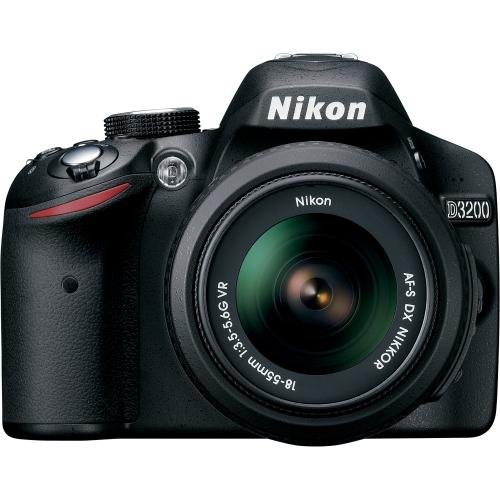
Nikon D3200 with 18-55mm Lens
Best for: beginners seeking high resolution and a kit lens
- Resolution
- 24.2 MP (what this guide is about)
- Sensor Format
- DX-format
- Sensor Resolution
- 24.2 MP
- Video Resolution
- Full HD 1080p
- Image Processor
- EXPEED III
- Included Lens
- 18-55mm Lens
View on Amazon: Nikon D3200 with 18-55mm Lens Affiliate link
The Nikon D3200 features a 24.2 MP DX-format CMOS sensor and EXPEED III processor. It records Full HD 1080p video and includes a 3.0-inch LCD display. This kit comes with an 18-55mm lens. It suits beginners who want high resolution in an APS-C format. The camera is compact and lightweight for its class. You get a practical entry point into interchangeable-lens photography.
Pros
- 24.2 MP DX-format CMOS sensor
- EXPEED III image processor
- Full HD 1080p video recording
- Includes 18-55mm zoom lens
Cons
- DX-format sensor, not full-frame
- Fixed 3.0-inch LCD screen
- Certified Refurbished condition with 90-day warranty
Good fit if
- You want high resolution in a DX format
- You need a kit lens included
- You prefer a simple DSLR interface
Skip if
- You require full-frame sensor size
- You need a new item with standard warranty
- You want a mirrorless camera body only
Verdict: Nikon D3200 24.2 MP DX-Format DSLR fits beginners who prioritize resolution and lens inclusion over modern mirrorless features. It is a solid choice for learning photography basics.

Sony Alpha a6000 24.3MP APS-C Camera
Best for: fast action and compact travel
- Resolution
- 24.3 MP (what this guide is about)
- Sensor Format
- APS-C
- Sensor Resolution
- 24 MP
- Burst Shooting Speed
- Up to 11 FPS
- Autofocus System
- Hybrid AF (179 phase / 25 contrast)
- ISO Sensitivity
- ISO 100-25600 (expandable to 51200)
View on Amazon: Sony Alpha a6000 24.3MP APS-C Camera Affiliate link
The Sony a6000 delivers 24.3 megapixels from an APS-C sensor. It uses a hybrid autofocus system with 179 phase-detection points. This setup helps you track moving subjects. The camera shoots up to 11 frames per second. It includes a 16-50mm power zoom lens. This kit suits you if you want fast performance in a compact body.
Pros
- 24.3 MP APS-C CMOS sensor
- 179-point hybrid autofocus system
- Up to 11 FPS continuous shooting
- ISO 100-25600 expandable range
Cons
- APS-C sensor is smaller than full-frame
- Burst speed drops with larger files
- No weather sealing listed in specs
Good fit if
- You need fast autofocus for action
- You prefer a compact camera body
- You shoot in varied lighting
Skip if
- You require full-frame image quality
- You need 4K video recording
- You want a large viewfinder
Verdict: The Sony a6000 24.3MP APS-C Mirrorless is a fast, compact option for shooters who prioritize speed and autofocus accuracy over sensor size.

Kodak PIXPRO 5x Optical Zoom Camera
Best for: casual snapshots and travel
- Resolution
- 16 MP (what this guide is about)
- Sensor Resolution
- 16MP
- Video Resolution
- 1080p Full HD
- Intended Use
- Vlogging
- Color
- Black
- Focal Length
- 28mm
View on Amazon: Kodak PIXPRO 5x Optical Zoom Camera Affiliate link
The Kodak PIXPRO FZ55 is a compact digital camera with a 16MP CMOS sensor. It features a 5x optical zoom lens starting at 28mm wide. You can record Full HD 1080p video. The body measures 3.6 by 2.23 by 0.9 inches and weighs 3.7 ounces. It supports SD cards up to 512GB. This model suits users who need a simple, lightweight tool for everyday snapshots and casual video.
Pros
- 16MP CMOS sensor captures detailed photos
- 5x optical zoom with 28mm wide angle lens
- Records Full HD 1080p video
- Lightweight 3.7-ounce body
- USB charging via included adapter
Cons
- 16MP resolution is lower than the 24MP+ sensors on other list items
- No built-in Wi-Fi or Bluetooth for wireless transfer
- Limited to 1080p video resolution
Good fit if
- You want a small camera that fits in a pocket
- You need a wide 28mm lens for indoor shots
- You prefer simple point-and-shoot operation
Skip if
- You require high-resolution 24MP or higher images
- You need wireless connectivity for phone sharing
- You want 4K video recording
Verdict: The Kodak PIXPRO FZ55 16MP Compact Camera is a lightweight option for casual photographers who prioritize portability and wide-angle framing over high resolution or modern connectivity features.

Canon PowerShot SX740 HS Compact Zoom Camera
Best for: travelers needing high zoom in a compact body
- Resolution
- 20.3 MP (what this guide is about)
- Sensor Resolution
- 20.3MP
- Image Stabilization
- 5-axis stabilization
- Video Resolution
- 4K UHD at 30p
- Image Processor
- DIGIC 8
- Configuration
- Bundle
View on Amazon: Canon PowerShot SX740 HS Compact Zoom Camera Affiliate link
The Canon PowerShot SX740 HS is a compact digital camera with a 20.3MP sensor. It features a 40x optical zoom lens and 5-axis image stabilization. You get 4K UHD video recording at 30p. Wi-Fi and Bluetooth allow remote control via the Canon Camera Connect app. This bundle includes a 64GB memory card and accessories. It suits travelers needing reach in a small body.
Pros
- 20.3MP CMOS sensor with DIGIC 8 processor
- 40x optical zoom lens (24–960mm equivalent)
- 4K UHD video recording at 30p
- Built-in 5-axis image stabilization
- Wi-Fi and Bluetooth connectivity
Cons
- 2.73 pounds weight is heavy for its compact size
- No mention of a flip-out or articulating display
- Fixed lens limits creative lens swapping
Good fit if
- You need extreme zoom reach in a pocketable body
- You want 4K video with built-in stabilization
- You prefer wireless transfer and remote control via app
Skip if
- You require interchangeable lenses for optical flexibility
- You need an articulating screen for vlogging
- You prioritize a lightweight body under 1 pound
Verdict: The Canon PowerShot SX740 HS Compact delivers strong zoom and video specs in a bundle. It fits travelers who value reach and wireless sharing over lens versatility.
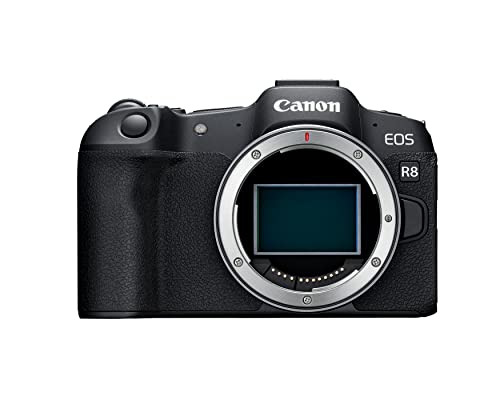
Canon EOS R8 Full-Frame Camera
Best for: Full-frame image quality and video
- Resolution
- 24.2 MP (what this guide is about)
- Sensor Format
- Full-frame
- Sensor Resolution
- 24.2 MP
- Autofocus System
- Dual Pixel CMOS AF II (1,053 AF zones)
- Video Resolution
- 4K up to 60 fps, Full HD up to 180 fps
- Image Processor
- DIGIC X
View on Amazon: Canon EOS R8 Full-Frame Camera Affiliate link
The Canon EOS R8 is a full-frame mirrorless camera with a 24.2 MP sensor and DIGIC X processor. It features Dual Pixel CMOS AF II for subject detection and uncropped 4K video at 60 fps. Weighing 2.15 pounds, it is compact for its sensor size. This body-only model suits photographers who prioritize image quality and autofocus performance in a lightweight package.
Pros
- Full-frame 24.2 MP CMOS sensor
- Dual Pixel CMOS AF II with 1,053 zones
- Uncropped 4K video at 60 fps
- DIGIC X image processor
Cons
- Heavier than other mirrorless options at 2.15 pounds
- Body only; no lens included
- No mention of in-body image stabilization
Good fit if
- You need full-frame image quality in a compact body
- You shoot fast-moving subjects requiring reliable autofocus
- You record 4K video at high frame rates
Skip if
- You want a complete kit with a lens included
- You prioritize the lightest possible camera weight
- You require in-body image stabilization
Verdict: Canon EOS R8 Full-Frame Mirrorless delivers full-frame resolution and advanced autofocus in a portable body. It fits users who value sensor size and video capabilities over minimal weight or bundled accessories.

Sony Alpha a6000 with 16-50mm Lens
Best for: fast action and portability
- Resolution
- 24.3 MP (what this guide is about)
- Sensor Format
- 35 millimeter full frame
- Sensor Resolution
- 24.2MP
- Burst Shooting Speed
- Up to 11 FPS
- Autofocus System
- Hybrid AF
- ISO Sensitivity
- ISO 100 25600 (expandable to 51200)
View on Amazon: Sony Alpha a6000 with 16-50mm Lens Affiliate link
The Sony a6000 is a compact mirrorless camera featuring a 24.3 MP sensor. It offers a 11 FPS burst rate and a 179-point hybrid autofocus system. The 0.39-inch electronic viewfinder and tilting LCD provide clear framing. This body suits you if you want fast performance in a small package. It includes a 16-50mm lens for everyday shooting.
Pros
- 24.3 MP sensor resolution
- 11 FPS continuous shooting speed
- 179-point hybrid autofocus system
- 0.39-inch electronic viewfinder
Cons
- 16-50mm lens has limited zoom range
- No weather sealing visible in specs
- 360-shot battery life is modest
Good fit if
- You need fast autofocus for action
- You want a compact camera body
- You prefer electronic viewfinders
Skip if
- You require weather-sealed construction
- You need a long telephoto lens included
- You prioritize high battery endurance
Verdict: The Sony a6000 24.3MP Mirrorless delivers speed and precision for active shooters. It fits you if you value quick bursts and sharp focus in a portable body.
Specifications side by side
| Spec | Nikon D3200 with 18-55mm Lens | Sony Alpha a6000 24.3MP APS-C Camera | Kodak PIXPRO 5x Optical Zoom Camera | Canon PowerShot SX740 HS Compact Zoom Camera | Canon EOS R8 Full-Frame Camera | Sony Alpha a6000 with 16-50mm Lens |
|---|---|---|---|---|---|---|
| Sensor Format | DX-format | APS-C | not stated | not stated | Full-frame | 35 millimeter full frame |
| Sensor Resolution | 24.2 MP | 24 MP | 16MP | 20.3MP | 24.2 MP | 24.2MP |
| Burst Shooting Speed | not stated | Up to 11 FPS | not stated | not stated | not stated | Up to 11 FPS |
| Autofocus System | not stated | Hybrid AF (179 phase / 25 contrast) | not stated | not stated | Dual Pixel CMOS AF II (1,053 AF zones) | Hybrid AF |
| Image Stabilization | not stated | not stated | not stated | 5-axis stabilization | not stated | not stated |
| Video Resolution | Full HD 1080p | not stated | 1080p Full HD | 4K UHD at 30p | 4K up to 60 fps, Full HD up to 180 fps | not stated |
| ISO Sensitivity | not stated | ISO 100-25600 (expandable to 51200) | not stated | not stated | not stated | ISO 100 25600 (expandable to 51200) |
| Image Processor | EXPEED III | not stated | not stated | DIGIC 8 | DIGIC X | not stated |
| Configuration | not stated | not stated | not stated | Bundle | Body Only | not stated |
| Included Lens | 18-55mm Lens | 16-50mm Lens | not stated | not stated | not stated | 16-50mm Lens |
| Resolution | 24.2 MP | 24.3 MP | 16 MP | 20.3 MP | 24.2 MP | 24.3 MP |
| Connectivity | not stated | not stated | not stated | Wi-Fi | not stated | not stated |
| Intended Use | not stated | not stated | Vlogging | not stated | not stated | not stated |
| Color | Black | Black | Black | Black | Black | Black |
| Focal Length | not stated | 50mm | 28mm | not stated | not stated | 50mm |
| Lens Mount | not stated | not stated | not stated | not stated | Canon RF Mount | not stated |
| Lens Type | Zoom | Zoom | Zoom | Zoom | not stated | Zoom |
| Focus Type | Autofocus | not stated | not stated | not stated | not stated | not stated |
| Dimensions | 4.92 × 3.03 × 3.78 inches | 6.25 × 5 × 5 inches | 3.6 × 2.23 × 0.9 inches | 1.6 × 4.3 × 2.5 inches | 3 × 6 × 4 inches | 6.18 × 5.2 × 5.67 inches |
| Weight | 1 pounds | 1.68 pounds | 3.7 ounces | 2.73 pounds | 2.15 pounds | 12.2 ounces |
| Size | 3 inches | 45.1mm x 120mm x 66.9mm | not stated | Compact | not stated | Compact |
| Model | 25492B | ILCE6000L/B-cr | FZ55BK | 2955C001_EDIP_1 | EOS R8 | ILCE6000L/B |
Frequently asked questions
Does a higher megapixel count always mean better image quality?
No. Resolution is only one factor. Sensor size and lens quality also matter. For example, the Canon EOS R8 uses a full-frame sensor with 24.2 MP. This combination often yields better low-light performance than a smaller sensor with the same pixel count. You get cleaner images in dim conditions.
How much can you crop a 24 MP photo?
You can crop significantly. A 24.2 MP or 24.3 MP sensor captures about 24 million pixels. This gives you plenty of data to cut out parts of the frame. The Sony Alpha a6000 offers 24.3 MP. You can zoom in digitally later without losing too much sharpness in the remaining image area.
Is 16 MP enough for social media?
Yes. Most social media platforms compress images. A 16 MP resolution, like the Kodak PIXPRO FZ55, captures 16 million pixels. This is well above the requirement for clear display on phones and computers. You do not need extra data for online sharing if you only view images on screens.
What is the difference between MP and sensor size?
Megapixels count pixels. Sensor size is the physical area. The Canon EOS R8 has a full-frame sensor with 24.2 MP. The Sony a6000 has an APS-C sensor with 24.3 MP. The larger sensor on the R8 typically gathers more light. This affects noise levels, not just the pixel count.
Can I print large posters with a 20 MP camera?
You can print medium-sized posters. A 20.3 MP sensor, like the Canon PowerShot SX740 HS, provides enough detail for prints up to 13x19 inches at high quality. Larger prints may show pixelation if viewed closely. For wall-sized displays, aim for 24 MP or higher to ensure sharp edges.
Do I need a mirrorless camera for high resolution?
Not necessarily. The Nikon D3200 is a DSLR with 24.2 MP. It offers high resolution in a traditional body. Mirrorless cameras like the Sony a6000 also offer 24.3 MP. Your choice depends on weight and autofocus needs. Resolution alone does not dictate the camera format you should buy.