Video Resolution Explained: What It Means for Mirrorless Cameras
As an Amazon Associate we earn from qualifying purchases. Links on this page are affiliate links.
Understanding Video Resolution in Mirrorless Cameras
Video resolution explained reveals how much detail your camera captures in each frame. It is the number of pixels that make up the image. Higher numbers mean sharper, clearer pictures. You see this spec listed as 4K, 1080p, or 8K on product pages. Most mirrorless cameras offer 4K video as a standard feature. This has become the new baseline for quality content creation.
4K video typically uses a resolution of 3840 by 2160 pixels. This is four times the pixel count of standard 1080p HD. The extra detail allows you to crop footage in post-production without losing clarity. You can zoom in on specific areas while maintaining a sharp image. This flexibility is valuable for storytelling and social media edits.
The label on the listing tells you the maximum resolution the sensor can record. Some cameras record 4K at different frame rates. Common rates are 24, 30, or 60 frames per second. Higher frame rates create smoother motion. This is useful for action shots or slow-motion effects. Lower frame rates often look more cinematic. You choose the rate based on your creative needs.
Why does this matter for mirrorless cameras? These bodies are compact and powerful. They bring professional video capabilities to smaller packages. You get high-resolution video without carrying heavy gear. The sensor size also plays a role. Larger sensors capture more light. This leads to better low-light performance. You get cleaner images with less noise.
When shopping, check the specific 4K standard. Some cameras use Ultra HD 4K. Others might use DCI 4K for cinema workflows. The difference is slight but important for your workflow. Ensure the listing confirms the resolution matches your expectations. This spec is a key factor in determining the camera’s utility for video projects.
4K Video Resolution Options
4K Video
4K video captures approximately 3840 by 2160 pixels. This resolution offers four times the detail of standard 1080p HD. You get sharper images with more clarity. The extra pixels allow you to crop or zoom in post-production without losing quality. This makes it ideal for professional-looking content. You can also downscale to 1080p for a cleaner final result. However, 4K files are larger. They require more storage space and faster memory cards. Processing these files demands a capable computer. For creators prioritizing image quality, this spec is essential. The Canon EOS R8 delivers uncropped 4K on a full-frame sensor. It suits those needing high-end video in a portable body. You pay for superior detail and flexibility in editing.
4K Video
This specification appears across various camera types, from mirrorless systems to pocket cams. The Canon EOS M50 with 15-45mm Lens offers a solid entry-level choice for beginners. It provides reliable eye autofocus in 4K, which helps vloggers keep focus sharp. The Sony Alpha a6400 APS-C Camera is another option, known for fast autofocus and compact size. It suits users who prioritize portability and tracking speed. The Canon EOS R50 24.2MP APS-C Mirrorless Camera features a flip screen, ideal for vlogging. It offers 4K oversampling for better image quality. The VENOPTIX 4K Pocket Vlogging Camera is designed for casual users needing a rotating lens. The Sony a6700 APS-C Mirrorless Camera supports high frame rates in 4K, suitable for slow-motion effects. Each device handles 4K differently based on sensor size and processing power.
Is 4K Video Worth Your Money
Who needs it
You should prioritize 4K video resolution if you plan to create content for modern digital platforms. Most social media sites and streaming services display high-definition footage, and 4K ensures your videos look crisp on large screens. The extra detail allows for significant flexibility during editing. You can crop into the frame or stabilize shaky shots without degrading the final output quality. This is essential for professional-looking tutorials, travel vlogs, or commercial projects where clarity matters. If you intend to share your work widely or sell it, the superior pixel count provides a tangible advantage. It future-proofs your library as display technology continues to advance. For anyone serious about visual storytelling, this spec is a practical necessity rather than a luxury.
Who can skip it
You can ignore 4K video if your primary goal is casual sharing or quick social updates. Many platforms compress footage heavily, reducing the visible benefit of higher resolution. If you shoot mostly for personal archives or share on mobile devices, 1080p remains perfectly adequate. The file sizes for 4K are significantly larger, which fills up storage drives faster and requires more powerful editing hardware. You may prefer to allocate your budget toward better audio gear, lenses, or lighting instead. These elements often impact perceived quality more than pixel count does. If you are a beginner learning the basics of composition and exposure, focusing on 4K adds unnecessary complexity. Stick to 1080p to keep your workflow simple and efficient. Prioritize ease of use and manageable data loads over maximum detail.
Video Resolution Glossary
4K Resolution
A standard capturing roughly 3840 by 2160 pixels. This offers four times the detail of 1080p, providing sharper images for modern displays.
1080p Resolution
Full HD video with 1920 by 1080 pixels. It remains a practical choice for social media and standard definition streaming platforms.
Megapixels
A unit measuring image resolution. One megapixel equals one million pixels. Higher counts generally indicate greater detail in your captured frames.
Sensor Format
The physical size of the camera sensor. Common formats include Micro Four Thirds and APS-C, affecting light gathering and image quality.
Color Depth
The number of bits used per color channel. Higher bit depths like 10-bit allow for smoother gradients and better color grading flexibility.
Frame Rate
The number of images captured per second, measured in hertz. Common rates include 24fps for film look and 60fps for smooth motion.
Bitrate
The amount of data processed per second. Higher bitrates usually preserve more detail but require larger storage files and faster memory cards.
Crop Factor
A multiplier describing how sensor size affects field of view. Smaller sensors crop the image, effectively increasing the focal length of lenses.
Quick picks
| # | Product | Best for | Price |
|---|---|---|---|
| 1 | Canon EOS R8 Full-Frame Camera | Full-frame video creators needing uncropped 4K | Check price of Canon EOS R8 Full-Frame Camera on Amazon |
| 2 | Canon EOS M50 with 15-45mm Lens | beginners needing reliable eye-AF in 4K | Check price of Canon EOS M50 with 15-45mm Lens on Amazon |
| 3 | Sony Alpha a6400 APS-C Camera | Compact 4K video and fast AF | Check price of Sony Alpha a6400 APS-C Camera on Amazon |
| 4 | Canon EOS R50 24.2MP APS-C Mirrorless Camera | vlogging with a flip screen | Check price of Canon EOS R50 24.2MP APS-C Mirrorless Camera on Amazon |
| 5 | VENOPTIX 4K Pocket Vlogging Camera | casual vloggers needing a rotating lens | Check price of VENOPTIX 4K Pocket Vlogging Camera on Amazon |
| 6 | Sony a6700 APS-C Mirrorless Camera | high frame rate APS-C video | Check price of Sony a6700 APS-C Mirrorless Camera on Amazon |
Our 6 picks
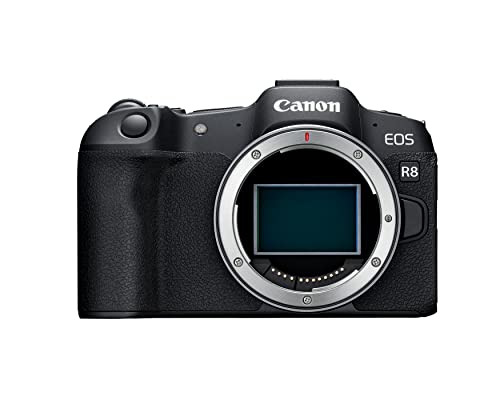
Canon EOS R8 Full-Frame Camera
Best for: Full-frame video creators needing uncropped 4K
- Video Resolution
- 4K Video (what this guide is about)
- Sensor Format
- Full-frame
- Sensor Resolution
- 24.2 MP
- Autofocus System
- Dual Pixel CMOS AF II (1,053 AF zones)
- Image Processor
- DIGIC X
- Configuration
- Body Only
View on Amazon: Canon EOS R8 Full-Frame Camera Affiliate link
The Canon EOS R8 is a full-frame mirrorless camera body with a 24.2 MP sensor and DIGIC X processor. It records uncropped 4K video at up to 60 fps, oversampled from 6K data. The camera features Dual Pixel CMOS AF II with subject detection for people, animals, and vehicles. It includes a vari-angle LCD touchscreen and an OLED electronic viewfinder. This compact body suits photographers who need high image quality and versatile video capabilities in a lightweight package.
Pros
- Full-frame sensor for improved low-light performance and dynamic range
- Uncropped 4K video recording at 60 fps oversampled from 6K
- Dual Pixel CMOS AF II with 1,053 AF zones and deep learning subject detection
- Lightweight design as Canon’s lightest full-frame RF mount camera
- Vari-angle LCD touchscreen for flexible shooting angles
Cons
- Body only configuration requires purchasing a lens separately
- Heavier build at 2.15 pounds compared to APS-C competitors
- Maximum movie record time limited to 2 hours
Good fit if
- You want full-frame image quality in a compact body
- You need uncropped 4K video with high frame rates
- You rely on advanced autofocus for moving subjects
Skip if
- You require a camera with a built-in lens
- You need video recording longer than 2 hours without interruption
- You prefer a lighter APS-C sensor system
Verdict: The Canon EOS R8 Full-Frame 4K Camera delivers professional-grade full-frame specs and advanced autofocus in a portable body, making it ideal for creators who prioritize image quality and video versatility over bundled accessories.

Canon EOS M50 with 15-45mm Lens
Best for: beginners needing reliable eye-AF in 4K
- Video Resolution
- 4K Video (what this guide is about)
- Sensor Format
- APS-C
- Sensor Resolution
- 24.1 Megapixel
- Autofocus System
- Dual Pixel CMOS AF, Eye Detection AF
- ISO Sensitivity
- ISO 100-25600 (H: 51200)
- Included Lens
- 15-45mm Lens
View on Amazon: Canon EOS M50 with 15-45mm Lens Affiliate link
The Canon EOS M50 is a compact APS-C mirrorless camera designed for creators who need reliable 4K video. It features a 24.1-megapixel sensor and records 4K UHD at 24p. You get Dual Pixel CMOS AF with Eye Detection for sharp focus. The kit includes a 15-45mm lens and a built-in OLED EVF. This setup suits beginners who want a portable body for vlogging or travel without heavy gear.
Pros
- Records 4K UHD video at 24p
- Dual Pixel CMOS AF with Eye Detection
- 24.1 Megapixel APS-C CMOS Sensor
- Built-in OLED EVF with Touch AF
Cons
- 4K video is limited to 24p frame rate
- Heavier and bulkier than some compact competitors
- Lacks 120p slow motion in 4K resolution
Good fit if
- You need a lightweight body for travel
- You prioritize accurate eye-tracking autofocus
- You want a complete kit with a lens
Skip if
- You require high frame rates like 60p in 4K
- You prefer full-frame sensor image quality
- You need a camera with a larger sensor
Verdict: Canon EOS M50 APS-C 4K 24p is a solid entry-level choice for vloggers who value autofocus reliability over high frame rates. It fits users who want a compact system with a lens included.

Sony Alpha a6400 APS-C Camera
Best for: Compact 4K video and fast AF
- Video Resolution
- 4K Video (what this guide is about)
- Sensor Format
- APS-C
- Burst Shooting Speed
- Up to 11Fps
- Autofocus System
- 425 Phase/ 425 contrast detection points
- Color
- Black
- Special Features
- Touchscreen
View on Amazon: Sony Alpha a6400 APS-C Camera Affiliate link
The Sony a6400 is a compact APS-C mirrorless camera that records 4K video. It features a fast autofocus system with 425 phase and 425 contrast detection points for accurate subject tracking. You can shoot continuous bursts at up to 11 fps. The tiltable LCD screen allows for flexible framing. This model suits vloggers and photographers who need reliable focus in a small body.
Pros
- Records 4K video resolution
- Fast 0.02 sec autofocus with real-time tracking
- 11 fps continuous shooting speed
- Tiltable LCD screen for vlogging
Cons
- APS-C sensor is smaller than full-frame options
- Uses older micro USB cable for charging
- No in-body image stabilization listed
Good fit if
- You need fast autofocus for moving subjects
- You prefer a compact camera body
- You shoot video and stills
Skip if
- You require full-frame sensor size
- You need 4K 60p video
- You want a flip-out screen
Verdict: Sony a6400 Compact APS-C Camera offers reliable 4K video and rapid autofocus in a small package. It fits users who prioritize portability and tracking speed over maximum sensor size.
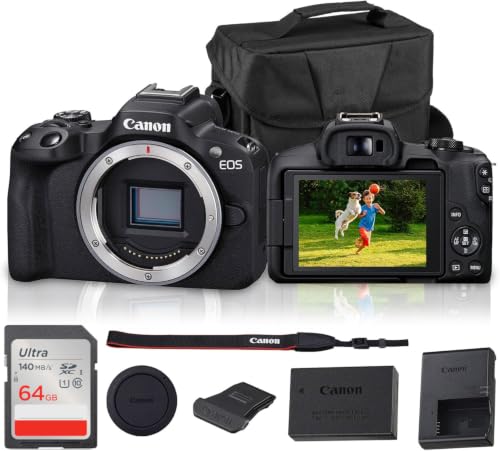
Canon EOS R50 24.2MP APS-C Mirrorless Camera
Best for: vlogging with a flip screen
- Video Resolution
- 4K Video (what this guide is about)
- Sensor Format
- APS-C
- Sensor Resolution
- 24.2 MP
- Burst Shooting Speed
- Up to 15 fps
- Autofocus System
- Dual Pixel CMOS AF II
- Configuration
- Body Only
View on Amazon: Canon EOS R50 24.2MP APS-C Mirrorless Camera Affiliate link
The Canon EOS R50 is an APS-C mirrorless camera with a 24.2 MP sensor. It records 4K 30p video oversampled from 6K data. The body includes a vari-angle screen for vlogging. It uses Dual Pixel CMOS AF II for tracking. This model suits beginners who need lightweight gear for social media content.
Pros
- 24.2 MP APS-C sensor
- 4K 30p video oversampled from 6K
- Dual Pixel CMOS AF II system
- Fully articulating vari-angle touchscreen
Cons
- 4K video limited to 30p frame rate
- APS-C sensor is smaller than full-frame
- Burst shooting capped at 15 fps
Good fit if
- You want 4K video oversampled for detail
- You need a vari-angle screen for vlogging
- You prefer a lightweight APS-C body
Skip if
- You require 4K 60p or higher frame rates
- You need full-frame sensor dimensions
- You want higher burst speeds than 15 fps
Verdict: Canon EOS R50 APS-C 24.2MP fits vloggers who prioritize a flip screen and 4K oversampling over high frame rates. It is a practical tool for social media creators who value portability.

VENOPTIX 4K Pocket Vlogging Camera
Best for: casual vloggers needing a rotating lens
- Video Resolution
- 4K Video (what this guide is about)
- Sensor Resolution
- 75MP
- Connectivity
- Wi-Fi
- Intended Use
- Vlogging, YouTube
- Color
- Black
- Special Features
- Touchscreen
View on Amazon: VENOPTIX 4K Pocket Vlogging Camera Affiliate link
This pocket camera records 4K video at 30fps with a 330-degree rotating lens. It features a 1.72-inch touch screen and WiFi for app control. The 75MP sensor captures photos, and the 2400mAh battery lasts up to 3 hours. It suits vloggers and students needing a portable device for YouTube or school projects.
Pros
- 330° horizontal auto-rotating lens for easy framing
- 4K 30fps video recording capability
- Smart face tracking in video mode
- Built-in WiFi for remote control and sharing
- 1.72-inch IPS touch screen for clear previews
Cons
- Small 1.72-inch display limits detailed review
- No mention of microphone input for audio
- No mention of external storage card slot
Good fit if
- You need a camera that rotates for self-recording
- You want simple app control via WiFi
- You prioritize portability over professional features
Skip if
- You require high frame rates for slow motion
- You need interchangeable lenses for optical control
- You want a dedicated camera with manual controls
Verdict: VENOPTIX VA001 Pocket Vlogging Camera fits beginners who need a rotating lens for easy self-framing. It works well for casual YouTube uploads but lacks the manual control of mirrorless systems.
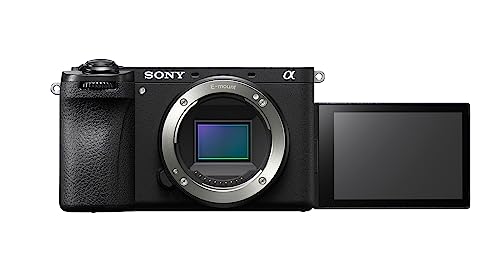
Sony a6700 APS-C Mirrorless Camera
Best for: high frame rate APS-C video
- Video Resolution
- 4K Video (what this guide is about)
- Sensor Format
- APS-C
- Sensor Resolution
- 26.0MP
- Image Processor
- BIONZ XR
- Configuration
- Body Only
- Intended Use
- Vlogging
View on Amazon: Sony a6700 APS-C Mirrorless Camera Affiliate link
The Sony a6700 is a compact APS-C mirrorless camera body. It features a 26.0MP back-illuminated sensor and the BIONZ XR processor. You get 4K video at 120p for smooth slow motion. The dedicated AI processor helps track subjects accurately. This model suits videographers who need high frame rates in a small package.
Pros
- 4K 120p high frame rate recording
- 26.0MP APS-C back-illuminated sensor
- Dedicated AI processor for subject tracking
- 4:2:2 10-bit color recording
Cons
- APS-C sensor, not full-frame
- Sold as body only
- Heavier than some compact competitors
Good fit if
- You need 4K 120p slow motion
- You want accurate subject tracking
- You prefer APS-C sensor size
Skip if
- You require full-frame sensor
- You want a kit with lens
- You need 8K video resolution
Verdict: Sony a6700 APS-C 4K 120p is a solid choice for creators who prioritize high frame rate video and reliable autofocus in a portable body.
Specifications side by side
| Spec | Canon EOS R8 Full-Frame Camera | Canon EOS M50 with 15-45mm Lens | Sony Alpha a6400 APS-C Camera | Canon EOS R50 24.2MP APS-C Mirrorless Camera | VENOPTIX 4K Pocket Vlogging Camera | Sony a6700 APS-C Mirrorless Camera |
|---|---|---|---|---|---|---|
| Sensor Format | Full-frame | APS-C | APS-C | APS-C | not stated | APS-C |
| Sensor Resolution | 24.2 MP | 24.1 Megapixel | not stated | 24.2 MP | 75MP | 26.0MP |
| Burst Shooting Speed | not stated | not stated | Up to 11Fps | Up to 15 fps | not stated | not stated |
| Autofocus System | Dual Pixel CMOS AF II (1,053 AF zones) | Dual Pixel CMOS AF, Eye Detection AF | 425 Phase/ 425 contrast detection points | Dual Pixel CMOS AF II | not stated | not stated |
| Video Resolution | 4K up to 60 fps, Full HD up to 180 fps | 4K UHD 24p | 4K | 4K at 30p | 4K at 30fps | 4K 120p |
| ISO Sensitivity | not stated | ISO 100-25600 (H: 51200) | not stated | not stated | not stated | not stated |
| Image Processor | DIGIC X | not stated | not stated | not stated | not stated | BIONZ XR |
| Configuration | Body Only | not stated | not stated | Body Only | not stated | Body Only |
| Included Lens | not stated | 15-45mm Lens | not stated | not stated | not stated | not stated |
| Resolution | 24.2 MP | not stated | not stated | 24.2 MP | not stated | not stated |
| Connectivity | not stated | not stated | not stated | not stated | Wi-Fi | not stated |
| Intended Use | not stated | not stated | not stated | Vlogging | Vlogging, YouTube | Vlogging |
| Color | Black | Black | Black | Black | Black | Black |
| Special Features | not stated | not stated | Touchscreen | not stated | Touchscreen | not stated |
| Lens Mount | Canon RF Mount | not stated | not stated | not stated | not stated | not stated |
| Focus Type | not stated | not stated | Autofocus | Autofocus | Autofocus | not stated |
| Dimensions | 3 × 6 × 4 inches | 2.3 × 4.6 × 3.5 inches | 6.1 × 5.6 × 4.5 inches | 8 × 7 × 6 inches | 5.51 × 2.76 × 3.95 inches | 4.8 × 2.72 × 2.5 inches |
| Weight | 2.15 pounds | 13.7 ounces | 1.41 pounds | 2 pounds | not stated | 14.5 ounces |
| Model | EOS R8 | 2680C011 | ILCE6400/B | 5811C002_EDIP_1 | VA001-NGUS01 | ILCE6700/B |
| Size | not stated | not stated | ILCE6400/B | not stated | not stated | not stated |
Frequently asked questions
Does 4K video require more storage space than 1080p?
Yes, 4K video files are significantly larger. This resolution captures approximately 3840 by 2160 pixels, which is four times the detail of 1080p. You will need larger memory cards to record longer clips. The increased data density helps maintain sharpness but fills storage faster.
Can I crop 4K footage without losing quality?
Yes, cropping 4K footage retains more detail than cropping 1080p. The extra pixels allow you to zoom in during post-production without visible pixelation. Cameras like the Canon EOS R8 provide uncropped 4K on full-frame sensors. This flexibility is useful for stabilizing shaky shots.
Is 4K video necessary for social media uploads?
It is not strictly necessary, but it offers future-proofing. Most platforms downscale 4K to 1080p for viewing, but the higher source quality often results in a cleaner image. Cameras like the Canon EOS R50 are designed for vlogging and social media creators who value portability.
Do mirrorless cameras shoot 4K at high frame rates?
Some models support high frame rates for slow-motion effects. The Sony a6700 APS-C camera records 4K video at up to 120 frames per second. This allows you to create smooth slow-motion clips. Higher frame rates reduce the resolution slightly in some modes, but 4K 120p is available.
Which sensor format is best for 4K video?
Full-frame sensors generally offer better low-light performance and depth of field. The Canon EOS R8 features a full-frame sensor for professional-grade specs. APS-C sensors, like those in the Sony a6400, are lighter and more compact. Both formats capture true 4K resolution effectively.
Are pocket cameras suitable for professional 4K vlogging?
Pocket cameras like the VENOPTIX VA001 are designed for casual use. They offer 4K video and rotating lenses for self-framing. However, they lack the manual control and sensor size of dedicated mirrorless systems. They work well for beginners but may not meet professional standards for color grading or audio.