Best Zoom Mirrorless Lens in 2026: 11 Picks Ranked by Specs
As an Amazon Associate we earn from qualifying purchases. Links on this page are affiliate links.
Choosing the best zoom mirrorless lens requires matching focal length and mount to your camera body. We compared 11 options ranked by published specifications. The Canon RF 75-300mm F4-5.6 Telephoto Zoom Bundle leads because its 2.32-pound weight offers lightweight telephoto reach for travel. Each pick reflects data from the product listings, including aperture, size, and sensor format compatibility. This guide helps you decide which lens fits your shooting style and gear system.
Quick picks
The best fit for you
- You need a lightweight telephoto for travel Canon RF 75-300mm F4-5.6 Telephoto Zoom Bundle It weighs 2.32 pounds and offers a 75-300mm focal range.
- You shoot APS-C wildlife or sports Nikon NIKKOR Z DX 50-250mm VR Lens It provides 50-250mm reach with VR on a 14.2-ounce body.
- You want one versatile lens for travel Nikon NIKKOR Z 24-200mm VR Zoom Lens It covers 24-200mm in a 1.26-pound package.
- You need full-frame portrait and event work Sony 24-70mm F2.8 Lens and Full-Frame Camera It features a constant f/2.8 aperture for full-frame E-Mount bodies.
- You require long-range wildlife and sports shots Nikon Z 100-400mm VR S Telephoto Lens It delivers 100-400mm reach with VR for Nikon Z users.
Our 11 picks

Canon RF 75-300mm F4-5.6 Telephoto Zoom Bundle
Best for: lightweight telephoto reach for travel
- Lens Type
- Zoom (what this guide is about)
- Lens Mount
- Canon RF
- Focal Length
- 75-300mm
- Maximum Aperture
- f/4-5.6
- Sensor Format
- Full-frame and APS-C
- Focus Type
- DC autofocus motor
View on Amazon: Canon RF 75-300mm F4-5.6 Telephoto Zoom Bundle
The Canon RF 75-300mm f/4-5.6 is a telephoto zoom lens for Canon RF mount cameras. It covers full-frame and APS-C sensors with a 75-300mm range. The lens weighs 2.32 pounds and has a 58mm filter thread. It uses a DC autofocus motor for focusing. This lens suits travelers and wildlife photographers who need reach without heavy gear.
Pros
- 75-300mm focal length for long-range shooting
- Compatible with full-frame and APS-C sensors
- Compact build at 2.32 pounds
- 58mm filter thread for accessories
Cons
- Variable aperture limits low-light performance
- No image stabilization mentioned in data
- Minimum focus distance of 4.9 feet
Good fit if
- You need a lightweight telephoto for travel
- You shoot wildlife or sports from a distance
- You use Canon RF mount cameras
Skip if
- You require fast constant aperture for low light
- You need internal zoom mechanisms
- You prioritize image stabilization
Verdict: Canon RF 75-300mm Telephoto Zoom offers accessible reach for Canon users. It fits those who prioritize portability over professional-grade optics and stabilization.

Nikon NIKKOR Z DX 50-250mm VR Lens
Best for: APS-C wildlife and sports photography
- Lens Type
- Zoom (what this guide is about)
- Focal Length
- 50-250mm
- Sensor Format
- APS-C Size/DX Format
- Image Stabilization
- Optical (VR)
- Included Lens
- 50-250mm Lens
- Color
- Black
This is a compact telephoto zoom lens for Nikon APS-C mirrorless cameras. It offers a 50-250mm focal length, which equals 75-375mm in full-frame terms. The lens includes built-in VR optical image stabilization rated at up to 5 stops. It weighs 14.2 ounces and features an assignable control ring. This lens suits you if you need reach for wildlife or sports on an APS-C body without carrying heavy glass.
Pros
- 50-250mm focal length provides 75-375mm equivalent reach
- VR optical image stabilization up to 5 stops
- Assignable control ring for quick settings changes
- Compact size at 4.60 inches in length
Cons
- Limited to APS-C DX format sensors
- Variable aperture limits low-light performance
- No weather sealing listed in specifications
Good fit if
- You shoot with Nikon Z DX cameras
- You need extra reach for distant subjects
- You prioritize a lightweight telephoto setup
Skip if
- You use full-frame Nikon Z cameras
- You require constant wide aperture for bokeh
- You need weather-sealed construction for rain
Verdict: Nikon Z DX 50-250mm VR APS-C Zoom delivers solid reach and stabilization for APS-C users. It fits photographers who want a lightweight telephoto option for action or nature.

Nikon NIKKOR Z 24-200mm VR Zoom Lens
Best for: travelers needing one versatile lens
- Lens Type
- Zoom (what this guide is about)
- Lens Mount
- Nikon Z
- Focal Length
- 24-200mm
- Image Stabilization
- Optical (VR)
- Color
- Black
- Dimensions
- 9.1 × 67 × 67 inches
The Nikon Z 24-200mm VR is a compact telephoto zoom lens for Nikon Z cameras. It offers an 8.3x optical zoom range, covering 24mm to 200mm. The lens includes optical vibration reduction and a customizable clickless control ring. You get aspherical and ED glass elements for image quality. This lens suits travelers who want one lens for wide and telephoto shots without carrying multiple units.
Pros
- 8.3x optical zoom range from 24mm to 200mm
- Built-in optical vibration reduction image stabilization
- Customizable clickless control ring for quick settings access
- Aspherical and ED glass elements for clarity
Cons
- Maximum focal length of 200mm is shorter than competitors reaching 300mm or 400mm
- Variable aperture limits low-light performance at longer focal lengths
- Weight of 1.26 pounds is heavier than some compact telephoto options
Good fit if
- You want a single lens for both wide-angle and telephoto shooting
- You prioritize image stabilization for handheld shooting
- You prefer a compact all-in-one solution for travel
Skip if
- You need focal lengths beyond 200mm for distant subjects
- You require a constant wide aperture for low-light conditions
- You are looking for the lightest possible telephoto lens
Verdict: Nikon Z 24-200mm VR All-in-One fits travelers who need a versatile range without swapping lenses, though you should skip it if you require longer reach than 200mm.

Sony 24-70mm F2.8 Lens and Full-Frame Camera
Best for: Full-frame portrait and event photography
- Lens Type
- Zoom (what this guide is about)
- Lens Mount
- Sony E-Mount
- Focal Length
- 24-70 mm
- Maximum Aperture
- F2.8
- Sensor Format
- 35mm full frame
- Focus Type
- Auto / manual focus
View on Amazon: Sony 24-70mm F2.8 Lens and Full-Frame Camera
This Sony FE 24-70mm f/2.8 GM is a standard zoom lens designed for Sony E-Mount full-frame cameras. It features a constant maximum aperture of f/2.8, allowing for consistent exposure across the 24-70mm focal range. The lens uses ED, Super ED, aspherical, and XA glass elements to reduce aberration and maximize resolution. You can focus as close as 0.38 meters. It pairs well with high-resolution bodies like the 33MP Sony Alpha 7 IV.
Pros
- Constant f/2.8 maximum aperture throughout the zoom range
- Specialized glass elements including ED, Super ED, and XA for high resolution
- Minimum focusing distance of 0.38 meters
- Instant auto and manual focus selection
Cons
- No image stabilization listed in the specifications
- No weather sealing mentioned in the data
- Aperture narrows to f/4-5.6 on some kit bundles, though this lens is f/2.8
Good fit if
- You need a fast aperture for low-light shooting
- You shoot portraits or events requiring shallow depth of field
- You use Sony E-Mount full-frame bodies
Skip if
- You require built-in image stabilization
- You shoot with Sony APS-C cameras only
- You need a telephoto reach beyond 70mm
Verdict: Sony FE 24-70mm f/2.8 GM Lens is a professional-grade standard zoom for photographers who prioritize optical sharpness and low-light performance on full-frame E-Mount bodies.

Nikon Z 100-400mm VR S Telephoto Lens
Best for: long-range wildlife and sports photography
- Lens Type
- Zoom (what this guide is about)
- Lens Mount
- Nikon Z
- Focal Length
- 100-400mm
- Maximum Aperture
- f/4.5-5.6
- Sensor Format
- FX and DX
- Focus Type
- STM stepping motors
The Nikon Z 100-400mm VR S is a premium telephoto zoom lens for Nikon Z series mirrorless cameras. It covers 100-400mm on FX bodies and extends to 150-600mm on DX sensors. The lens features Vibration Reduction for up to 5.5 stops of stabilization. Two STM stepping motors drive the autofocus for silent operation. It also supports 1.4x and 2x teleconverters for increased reach.
Pros
- 100-400mm focal length range on FX sensors
- Up to 5.5 stops of Vibration Reduction
- Dual STM motors for silent autofocus
- Compatible with 1.4x and 2x teleconverters
Cons
- Variable maximum aperture of f/4.5-5.6
- Heavier build at 3.16 pounds
- Longer physical length at 8.74 inches
Good fit if
- You need long reach for wildlife or sports
- You shoot with Nikon Z FX or DX bodies
- You want teleconverter compatibility for extra reach
Skip if
- You require a constant fast aperture
- You prioritize the lightest possible lens weight
- You use a camera mount other than Nikon Z
Verdict: The Nikon Z 100-400mm VR S Telephoto Zoom delivers substantial reach and stabilization for Nikon Z users. It suits photographers who need to extend their focal length with teleconverters or shoot from a distance.

Nikon Z 24-120mm f/4 S Zoom
Best for: Versatile shooting with constant aperture
- Lens Type
- Zoom (what this guide is about)
- Lens Mount
- Nikon Z
- Focal Length
- 24-120mm
- Maximum Aperture
- f/4
- Sensor Format
- FX and DX
- Focus Type
- STM stepping motors
This Nikon zoom lens covers 24-120mm with a constant f/4 aperture. It uses two STM stepping motors for fast, quiet autofocus. You can focus as close as 1.15 ft at any zoom setting. The lens includes a custom control ring and a dedicated manual focusing ring. It weighs 1.39 pounds and fits Nikon Z mount cameras.
Pros
- Constant f/4 maximum aperture across the 24-120mm range
- STM stepping motors for fast and quiet autofocus
- 1.15 ft minimum focusing distance at all zoom positions
- Custom control ring for aperture, ISO, or exposure compensation
Cons
- f/4 aperture is slower than the f/2.8 options on this list
- No image stabilization mentioned in the specifications
- Heavier at 1.39 pounds compared to some compact alternatives
Good fit if
- You need a versatile focal range for travel or events
- You prefer a constant aperture for consistent exposure
- You want precise manual focusing with a dedicated ring
Skip if
- You require faster f/2.8 glass for low light
- You need built-in image stabilization
- You want the lightest possible lens for hiking
Verdict: Nikon NIKKOR Z 24-120mm f/4 S Zoom Lens suits photographers who value a constant aperture and sharp optics. It is a solid choice for general purpose shooting where versatility matters more than speed.

Tamron 17-70mm f/2.8 VC RXD
Best for: Fujifilm APS-C standard zoom
- Lens Type
- Zoom (what this guide is about)
- Lens Mount
- Fujifilm X
- Focal Length
- 17-70mm
- Maximum Aperture
- F/2.8
- Sensor Format
- APS-C
- Focus Type
- Autofocus RXD
This Tamron lens offers a 4.1x zoom range for Fujifilm APS-C cameras. It maintains a constant f/2.8 aperture throughout the 17-70mm span. The design includes VC image stabilization and weatherproofing. Weighing 1.17 pounds, it balances reach with a manageable form factor. You get high light intensity and consistent performance across the focal range.
Pros
- Constant f/2.8 aperture
- 4.1x zoom range
- VC image stabilization
- Weatherproof construction
Cons
- APS-C sensor format only
- Heavier than some kit lenses
- Limited to Fujifilm X mount
Good fit if
- You shoot with Fujifilm APS-C bodies
- You need a constant f/2.8 aperture
- You want weatherproof protection
Skip if
- You use full-frame cameras
- You require native Canon or Nikon mounts
- You prefer lighter glass
Verdict: Tamron 17-70mm F/2.8 APS-C Zoom fits Fujifilm users who need a versatile, weather-sealed standard zoom with a fast constant aperture.

Canon RF 75-300mm F4-5.6 Telephoto Zoom Lens
Best for: Lightweight telephoto reach
- Lens Type
- Zoom (what this guide is about)
- Lens Mount
- Canon RF
- Focal Length
- 75-300mm
- Maximum Aperture
- f/4-5.6
- Focus Type
- Servo AF
- Color
- Black
View on Amazon: Canon RF 75-300mm F4-5.6 Telephoto Zoom Lens
The Canon RF 75-300mm F4-5.6 is a telephoto zoom lens for Canon EOS R mirrorless cameras. It offers a 75-300mm focal length with a variable maximum aperture of f/4-5.6. The lens features Servo AF with pupil detection for tracking subjects. It measures 5.8 inches in length and weighs 1.12 pounds. This accessible zoom suits photographers needing long-range reach and background compression without a heavy build.
Pros
- 75-300mm telephoto zoom range
- Servo AF with pupil detection
- Compact 5.8-inch length
- Lightweight 1.12-pound design
Cons
- Variable maximum aperture of f/4-5.6
- No image stabilization mentioned in specs
- Shorter focal length than premium rivals
Good fit if
- You want a lightweight telephoto zoom
- You shoot with Canon EOS R bodies
- You need background compression for portraits
Skip if
- You require constant aperture lenses
- You need extreme 400mm reach
- You prioritize built-in vibration reduction
Verdict: The Canon RF 75-300mm Telephoto Zoom fits casual shooters who need reach without bulk. It delivers solid tracking for portraits and distant subjects on Canon mirrorless bodies.

Tamron 18-300mm f/3.5-6.3 for Nikon Z
Best for: APS-C travel and everyday versatility
- Lens Type
- Zoom (what this guide is about)
- Lens Mount
- Nikon Z
- Focal Length
- 18-300mm
- Maximum Aperture
- F/3.5-6.3
- Sensor Format
- APS-C
- Focus Type
- VXD AF
This Tamron lens covers an 18-300mm range on Nikon Z APS-C cameras. It features a 16.6x zoom ratio and VXD autofocus. The design is compact, measuring 5 inches long and weighing 1.4 pounds. You get a maximum magnification of 1:2. This all-in-one zoom suits travel and everyday snapshots where carrying multiple lenses is impractical.
Pros
- 18-300mm focal length covers wide to telephoto
- VXD autofocus system for high-speed focusing
- 1:2 maximum magnification ratio
- Compact 5-inch length and 1.4-pound weight
Cons
- Variable aperture drops to f/6.3 at 300mm
- Limited to APS-C sensor format
- No constant aperture throughout the zoom range
Good fit if
- You need a single lens for travel photography
- You shoot with an APS-C Nikon Z camera
- You want to avoid changing lenses frequently
Skip if
- You shoot with full-frame Nikon Z cameras
- You require a constant f/2.8 aperture
- You need native telephoto reach beyond 300mm
Verdict: Tamron 18-300mm F/3.5-6.3 for Nikon Z APS-C offers extensive reach in a light body. It fits APS-C users who prioritize convenience and portability over maximum aperture speed.

Nikon Z 24-70mm f/2.8 S II
Best for: Full-frame Nikon Z video and hybrid shooters
- Lens Type
- Zoom (what this guide is about)
- Lens Mount
- Nikon Z
- Focal Length
- 24-70mm
- Maximum Aperture
- f/2.8
- Sensor Format
- Full-Frame
- Focus Type
- Autofocus
This is a full-frame zoom lens for Nikon Z cameras. It features a constant f/2.8 aperture and an internal zoom mechanism. The design keeps the center of gravity stable, which helps when using gimbals. Autofocus is five times faster than the previous model and operates quietly. It focuses as close as 9.5 inches at 24mm. You get smooth focus transitions with suppressed breathing. This lens suits shooters who need professional speed and stability.
Pros
- Constant f/2.8 aperture across the 24-70mm range
- Internal zoom mechanism maintains balance for gimbals
- Autofocus is five times faster than the prior generation
- Focus breathing suppressed to less than half the previous model
- 11 rounded diaphragm blades for smooth bokeh
Cons
- Heavier at 1.49 pounds compared to variable-aperture zooms
- Limited to the Nikon Z mount system
- Maximum magnification is 0.32x at 70mm
Good fit if
- You need a fast aperture for low-light video work
- You stabilize your camera on a gimbal or matte box
- You shoot on full-frame Nikon Z bodies
Skip if
- You use Sony or Canon mirrorless cameras
- You require a lighter lens for long hikes
- You prefer a variable aperture to save weight
Verdict: Nikon NIKKOR Z 24-70mm f/2.8 S II delivers professional stability and speed for video creators using full-frame Nikon Z cameras. Its internal zoom design and fast autofocus make it a reliable tool for gimbal work.
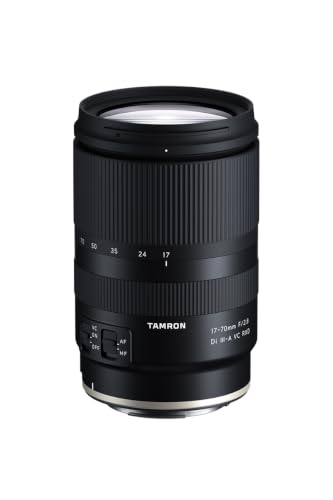
Tamron 17-70mm f/2.8 for Canon RF APS-C
Best for: Canon APS-C users needing f/2.8 versatility
- Lens Type
- Zoom (what this guide is about)
- Lens Mount
- Canon RF
- Focal Length
- 17-70mm
- Maximum Aperture
- F/2.8
- Sensor Format
- APS-C
- Minimum Focusing Distance
- 0.19m (7.5”)
This Tamron lens covers a versatile 17-70mm range on Canon RF APS-C cameras. It maintains a constant f/2.8 aperture throughout the zoom range, which helps in low light. The built-in VC image stabilization supports both stills and video. You get a minimum focusing distance of 0.19m for close-ups. It includes physical switches for autofocus and stabilization on the mount.
Pros
- Constant f/2.8 maximum aperture
- Built-in VC image stabilization
- 0.19m minimum focusing distance
- Physical AF/MF and VC switches
Cons
- APS-C sensor format only
- Heavier at 1.2 pounds
- No weather sealing mentioned
Good fit if
- You shoot on Canon RF APS-C bodies
- You need a constant f/2.8 aperture
- You want close-up capability
Skip if
- You use full-frame cameras
- You prefer lighter glass
- You need weather sealing
Verdict: Tamron 17-70mm F/2.8 APS-C Zoom offers a fast constant aperture and stabilization for Canon APS-C users. It suits those prioritizing low-light performance and close focusing over weight savings.
Specifications side by side
| Spec | Canon RF 75-300mm F4-5.6 Telephoto Zoom Bundle | Nikon NIKKOR Z DX 50-250mm VR Lens | Nikon NIKKOR Z 24-200mm VR Zoom Lens | Sony 24-70mm F2.8 Lens and Full-Frame Camera | Nikon Z 100-400mm VR S Telephoto Lens | Nikon Z 24-120mm f/4 S Zoom | Tamron 17-70mm f/2.8 VC RXD | Canon RF 75-300mm F4-5.6 Telephoto Zoom Lens | Tamron 18-300mm f/3.5-6.3 for Nikon Z | Nikon Z 24-70mm f/2.8 S II | Tamron 17-70mm f/2.8 for Canon RF APS-C |
|---|---|---|---|---|---|---|---|---|---|---|---|
| Lens Mount | Canon RF | not specified | Nikon Z | Sony E-Mount | Nikon Z | Nikon Z | Fujifilm X | Canon RF | Nikon Z | Nikon Z | Canon RF |
| Focal Length | 75-300mm | 50-250mm | 24-200mm | 24-70 mm | 100-400mm | 24-120mm | 17-70mm | 75-300mm | 18-300mm | 24-70mm | 17-70mm |
| Maximum Aperture | f/4-5.6 | not specified | not specified | F2.8 | f/4.5-5.6 | f/4 | F/2.8 | f/4-5.6 | F/3.5-6.3 | f/2.8 | F/2.8 |
| Sensor Format | Full-frame and APS-C | APS-C Size/DX Format | not specified | 35mm full frame | FX and DX | FX and DX | APS-C | not specified | APS-C | Full-Frame | APS-C |
| Focus Type | DC autofocus motor | not specified | not specified | Auto / manual focus | STM stepping motors | STM stepping motors | Autofocus RXD | Servo AF | VXD AF | Autofocus | not specified |
| Image Stabilization | not specified | Optical (VR) | Optical (VR) | not specified | Vibration Reduction | not specified | not specified | not specified | not specified | not specified | not specified |
| Minimum Focusing Distance | 4.9 feet | not specified | not specified | 0.38 meters | not specified | 1.15 ft. | not specified | not specified | not specified | 9.5 inches | 0.19m (7.5”) |
| Configuration | Bundle | not specified | not specified | not specified | not specified | not specified | not specified | not specified | not specified | not specified | not specified |
| Included Lens | not specified | 50-250mm Lens | not specified | not specified | not specified | not specified | not specified | not specified | not specified | not specified | not specified |
| Color | not specified | Black | Black | Black | Black | Black | Black | Black | Black | Black | Black |
| Aperture | not specified | not specified | not specified | f/2.8 | not specified | not specified | f/2.8 | not specified | not specified | f/2.8 | f/2.8 |
| Lens Type | Zoom | Zoom | Zoom | Zoom | Zoom | Zoom | Zoom | Zoom | Zoom | Zoom | Zoom |
| Dimensions | 5.75 × 4.09 × 4.09 inches | 4.33 × 2.91 × 2.91 inches | 9.1 × 67 × 67 inches | not specified | 8.74 × 3.86 × 3.86 inches | 10.6 × 4.6 × 4.6 inches | 4.72 × 2.95 × 2.95 inches | 5.8 × 2.8 × 2.8 inches | 5 × 2.97 × 2.97 inches | 5.59 × 3.31 × 3.31 inches | 4.6 × 2.9 × 2.9 inches |
| Weight | 2.32 pounds | 14.2 ounces | 1.26 pounds | not specified | 3.16 pounds | 1.39 pounds | 1.17 pounds | 1.12 pounds | 1.4 pounds | 1.49 pounds | 1.2 pounds |
| Model | 7155C005_AG9RE_1 | 20085 | 20092 | ILCE7M4 | 20106 | 20105 | B070X | 7155C002 | AFB061Z700 | 20129 | AFB070R700 |
| Size | not specified | 4.60 | 5.40 | not specified | not specified | 5.30 | not specified | Small | not specified | not specified | not specified |
If you need hardware for dedicated property surveillance, compare focal specifications for the best security cameras with optical zoom.
How to choose the right zoom lens
-
Match your sensor format
You must select a lens designed for your camera’s sensor size. The Nikon Z DX 50-250mm VR is built for APS-C bodies, while the Sony 24-70mm F2.8 is for full-frame systems. Using an APS-C lens on a full-frame camera may cause vignetting, and full-frame lenses on APS-C bodies add unnecessary weight. Check the sensor format specification in the product data to ensure compatibility. This step prevents wasted money on optics that do not fit your imaging circle requirements.
-
Check lens mount compatibility
Your lens mount must match your camera body exactly. Canon RF lenses fit only Canon RF mount cameras, and Nikon Z lenses require Nikon Z mounts. The Tamron 17-70mm f/2.8 VC RXD is specifically made for Fujifilm X mount cameras. You cannot adapt these mounts without significant optical loss or mechanical issues. Verify the lens mount attribute before purchasing. This ensures the lens communicates correctly with your camera for autofocus and aperture control.
-
Evaluate weight and portability
Weight significantly impacts your shooting experience, especially for travel. The Canon RF 75-300mm F4-5.6 Telephoto Zoom Bundle weighs 2.32 pounds, which is substantial for long hikes. In contrast, the Nikon Z DX 50-250mm VR weighs only 14.2 ounces, making it ideal for carrying all day. The Tamron 17-70mm f/2.8 for Canon RF APS-C is even lighter at 1.2 pounds. Compare the weight specifications to find a balance between reach and comfort for your typical shooting environment.
-
Consider focal length range
Zoom range determines how versatile your lens is. The Nikon Z 24-200mm VR offers a wide range from wide-angle to telephoto, fitting travelers who need one lens. The Tamron 18-300mm f/3.5-6.3 for Nikon Z provides even more reach, covering 18-300mm for APS-C users. If you need extreme distance, the Nikon Z 100-400mm VR S Telephoto Lens extends to 400mm. Choose a range that covers your most common subjects without requiring frequent lens swaps.
-
Assess aperture speed
Aperture affects low-light performance and background blur. The Sony 24-70mm F2.8 and Tamron 17-70mm f/2.8 offer a constant f/2.8 aperture, allowing more light in dim conditions. The Canon RF 75-300mm F4-5.6 has a variable aperture that narrows as you zoom, reducing light intake at longer focal lengths. If you shoot in low light or want blurred backgrounds, prioritize lenses with wider apertures. Check the aperture specification to understand light gathering capabilities.
Frequently asked questions
Which is the lightest telephoto zoom for Canon RF?
The Canon RF 75-300mm F4-5.6 Telephoto Zoom Lens is the lighter option at 1.12 pounds. It measures 2.8 by 2.8 by 5.8 inches. The bundle version weighs 2.32 pounds because it includes extra accessories. Both fit Canon mirrorless bodies and offer reach for distant subjects.
What is the best budget telephoto for Nikon Z APS-C?
The Nikon NIKKOR Z DX 50-250mm VR Lens is the best budget choice. It weighs just 14.2 ounces and measures 2.91 by 2.91 by 4.33 inches. This lens provides solid reach and stabilization for APS-C users who shoot wildlife or sports from a distance.
Does the Nikon Z 24-200mm VR weigh more than the Tamron 17-70mm?
Yes, the Nikon Z 24-200mm VR weighs 1.26 pounds. The Tamron 17-70mm f/2.8 VC RXD for Fujifilm X Mount weighs 1.17 pounds. The Tamron is slightly lighter and offers a faster constant aperture. The Nikon covers a wider focal range for travel versatility.
Which lens has a constant f/2.8 aperture for full-frame cameras?
The Sony 24-70mm F2.8 Lens and Full-Frame Camera bundle features a constant f/2.8 aperture. The Nikon Z 24-70mm f/2.8 S II also offers this speed for full-frame Nikon Z bodies. Both are designed for professional-grade optical sharpness and low-light performance on compatible cameras.
How big is the Nikon Z 100-400mm VR S Telephoto Lens?
The Nikon Z 100-400mm VR S Telephoto Lens measures 3.86 by 3.86 by 8.74 inches. It weighs 3.16 pounds. This substantial size supports its long-range capabilities for wildlife and sports photography. It suits users who need to extend focal length or shoot from far away.
Is the Tamron 18-300mm for Nikon Z heavy for travel?
It weighs 1.4 pounds and measures 2.97 by 2.97 by 5 inches. This is a moderate weight for an APS-C travel lens. It offers extensive reach in a light body. You prioritize convenience and portability over maximum aperture speed with this versatile zoom option.
Which lens is best for video creators using gimbal work?
The Nikon Z 24-70mm f/2.8 S II is ideal for video creators. It features an internal zoom design that maintains balance during movement. It weighs 1.49 pounds and measures 3.31 by 3.31 by 5.59 inches. Its fast autofocus makes it a reliable tool for gimbal work.