Choosing Mirrorless Lens in 2026: The Specs That Matter and 8 Picks
As an Amazon Associate we earn from qualifying purchases. Links on this page are affiliate links.
This mirrorless camera lense buying guide helps you select the right optics for your system. You will decide between zoom versatility and prime sharpness by comparing published specifications. We evaluated eight options based on mount compatibility, sensor format, weight, and focal length. These metrics determine how each lens performs in real-world scenarios. You can match these specs to your shooting style and camera body.
The list includes compact telephotos for APS-C users, heavy super-zooms for wildlife, and fast primes for low light. Each pick is ranked by how well its specs align with specific needs. You will find clear distinctions between full-frame and crop-sensor options. The guide focuses on practical trade-offs like size versus reach. Read on to find the lens that fits your technical requirements and budget constraints without compromise.
Our top pick: Canon RF-S 55-210mm F5-7.1 IS STM Telephoto Lens.
Key Specs for Mirrorless Lenses
Sensor Format Compatibility
Your lens must match your camera's sensor size to avoid vignetting or reduced image quality. APS-C lenses, like the Canon RF-S 55-210mm, are designed for smaller sensors and often offer lighter weight for travel. Full-frame lenses, such as the Sony FE 90mm Macro, cover larger sensors and provide wider fields of view on the same body. Micro Four Thirds options, including the Panasonic Lumix G 45-200mm, are compact but have different crop factors. Always check the lens attributes to ensure it fits your specific camera system. Using an incompatible lens can result in black corners or mechanical interference. Match the format to your body for optimal performance.
- Check lens mount type
- Verify sensor format support
- Confirm crop factor impact
Focal Length Range
Focal length determines how much of the scene you capture and how large subjects appear. Zoom lenses, like the Tamron 150-500mm, offer versatility by covering wide to telephoto ranges, ideal for wildlife or sports where you cannot move closer. Prime lenses, such as the Zeiss Touit 32mm, have a fixed focal length, often providing better sharpness and wider apertures for low light. The Canon RF 75-300mm provides a mid-range telephoto zoom for distant subjects. Consider your typical shooting distance. If you photograph landscapes, a wider range helps. For portraits, a fixed focal length may yield superior results. Balance versatility with optical quality based on your needs.
- Identify minimum focal length
- Check maximum zoom ratio
- Assess reach for subjects
Maximum Aperture
Aperture controls the amount of light entering the lens and affects depth of field. A wider aperture, like f/0.95 on the Voigtländer Nokton, allows more light, enabling faster shutter speeds in dim conditions and creating blurred backgrounds. Narrower apertures, such as f/4.0 on the Panasonic Lumix G, are common in zoom lenses and maintain better sharpness across the frame. The Sony FE 90mm Macro at f/2.8 offers a balance for detail work. Consider your shooting environment. Low-light venues require wider apertures. Daylight photography can tolerate narrower openings. Wider apertures often increase size and cost, so weigh light gathering against portability.
- Note widest f-stop value
- Check aperture variability
- Evaluate low-light capability
Lens Weight and Size
Weight and physical dimensions impact portability and handling comfort during extended shoots. Heavier lenses, like the Tamron 150-500mm at 6 pounds, provide extreme reach but require sturdy support and can cause fatigue. Lighter options, such as the Canon RF-S 55-210mm at 14.4 ounces, are easier to carry for travel or casual use. The Zeiss Touit 32mm weighs just 7.05 ounces, fitting easily in small bags. Consider your carrying habits. If you hike or travel light, prioritize compact specs. For studio or tripod use, weight matters less. Balance the need for reach or speed with the physical burden of the gear.
- Check total lens weight
- Measure physical dimensions
- Assess carrying comfort
Intended Use Case
Your primary subject matter dictates the best lens characteristics. Macro lenses, like the Sony FE 90mm and Rokinon Cine DS 100mm, are designed for close-up detail work with high magnification. Telephoto zooms, such as the Canon RF 75-300mm, suit distant subjects like birds or sports. Wide-angle primes, like the Voigtländer Nokton, excel in architecture or low-light scenes. The Panasonic Lumix G 45-200mm offers a balanced range for general telephoto needs. Define your main shooting genre. Wildlife requires reach. Portraits benefit from sharp primes. Macro demands close focus. Aligning the lens type with your subject ensures you capture the desired image quality and framing.
- Match lens to subject
- Verify focus distance needs
- Check specialization features
Autofocus and Stabilization
Autofocus speed and image stabilization affect shot success rates, especially in motion or low light. Lenses with STM motors, like the Canon RF-S 55-210mm, offer quiet and smooth focusing for video and photo. Optical stabilization, found in the Panasonic Lumix G 45-200mm, compensates for camera shake, allowing sharper handheld shots at slower speeds. Manual focus lenses, such as the Rokinon Cine DS 100mm, require skill but offer precise control for video or macro work. Consider your shooting style. Action photography needs fast AF. Video benefits from smooth focus transitions. Tripod use reduces stabilization needs. Choose based on your reliance on automatic corrections.
- Identify autofocus motor type
- Check for stabilization
- Assist focus control needs
Lens Configuration Type
Lenses come as standalone units or bundles, affecting what you receive and how you use them. A bundle, like the Canon RF 75-300mm Telephoto Zoom Bundle, may include accessories or multiple items, offering convenience. Standalone lenses, such as the Tamron 150-500mm, are sold individually, allowing you to pick exactly what you need. Consider your existing gear. If you lack caps or hoods, a bundle might save steps. If you already have accessories, a standalone lens is more efficient. Check the product attributes for configuration details. Bundles can simplify setup but may include items you do not need. Standalone lenses offer focused selection.
- Check bundle inclusions
- Verify standalone availability
- Assess accessory needs
Types of Mirrorless Lenses
Compact Telephoto Zooms
These lenses prioritize reach and portability over speed. The Canon RF-S 55-210mm and RF 75-300mm offer extended focal lengths for distant subjects while maintaining manageable weights. The RF-S model weighs 14.4 ounces and fits APS-C bodies, while the RF version reaches 300mm. You trade maximum aperture speed for a lighter kit. This type suits travel photographers who need to capture faraway details without carrying heavy glass. The smaller physical footprint makes them ideal for long days on the move where bulk is a concern.
Prime Lenses
Prime lenses offer fixed focal lengths and often wider apertures for better low-light performance. The Zeiss Touit 32mm f/1.8 for Sony E-mount delivers sharp images and high contrast. Weighing just 7.05 ounces, it is significantly lighter than zoom alternatives. You gain image quality and compactness but lose the ability to zoom digitally or optically. This type suits photographers who prefer to move their feet and want consistent optical performance. The fixed focal length encourages a specific shooting style and simplifies lens choices for everyday carry.
Specialty Macro Lenses
Macro lenses provide close-focusing capabilities for detailed shots. The Sony FE 90mm f/2.8 Macro G OSS is built for full-frame bodies and delivers professional-grade sharpness. It weighs 1.33 pounds and includes stabilization. Alternatively, the Rokinon Cine DS 100mm T3.1 is a manual focus option for Micro Four Thirds users, weighing 1.6 pounds. You trade autofocus convenience for specialized optical designs optimized for close work. This type suits photographers focusing on insects, textures, or product details where working distance and resolution are critical requirements.
Avoid These Mirrorless Lens Mistakes
Mismatching sensor format with lens design
Using an APS-C lens on a full-frame body causes severe vignetting and black corners in your images. You must verify that the lens mount and optical design match your camera's sensor size. Check the product specifications for crop factor compatibility before purchasing to ensure full coverage.
Ignoring maximum aperture in low light
A small maximum aperture limits light intake, forcing higher ISO settings that introduce noise. Look for wide aperture numbers, like f/1.8 or f/2.8, to improve performance in dim environments. Wider apertures also provide better background separation, which is essential for portrait and low-light photography.
Overlooking lens weight and balance
Heavy lenses can make your camera setup cumbersome and unbalanced, leading to shaky handheld shots. Compare the weight specifications of zoom versus prime options. Choose lighter optics for travel or video work to maintain stability and comfort during extended shooting sessions without straining your arms.
Assuming all zooms offer constant speed
Many zoom lenses have variable apertures that narrow as you zoom in, reducing light gathering. A lens might be f/3.5 at the wide end but f/5.6 at the telephoto end. Check the aperture range in the specs to understand how exposure changes across the focal length.
Quick picks
Our 8 picks

Canon RF-S 55-210mm F5-7.1 IS STM Telephoto Lens
Best for: Canon APS-C users needing lightweight reach
- Lens Mount
- Canon RF
- Focal Length
- 55-210mm
- Maximum Aperture
- F5-7.1
- Sensor Format
- APS-C
- Focus Type
- STM
- Image Stabilization
- Optical image stabilization
View on Amazon: Canon RF-S 55-210mm F5-7.1 IS STM Telephoto Lens
This Canon RF-S telephoto zoom covers 55-210mm on APS-C bodies, giving you an 88-336mm full-frame equivalent range. It uses STM autofocus for smooth operation and includes optical image stabilization rated at 4.5 stops, or 7.0 stops with compatible in-body stabilization. The lens features UD glass and Super Spectra Coating to reduce flare. It is a lightweight option for Canon APS-C users.
Pros
- 55-210mm focal length with 88-336mm full-frame equivalent coverage
- Optical image stabilization up to 4.5 stops
- STM motor for quiet and smooth autofocus
- Minimum focus distance of 0.73m (28.7 in.)
- UD glass elements reduce chromatic aberration
Cons
- Maximum aperture of f/5-7.1 limits low-light performance
- Designed only for APS-C sensors, not full-frame
- Heavier at 14.4 ounces than some compact alternatives
Good fit if
- You own a Canon APS-C mirrorless camera like the R50 or R10
- You need a lightweight telephoto zoom for travel or wildlife
- You want a budget-friendly lens with image stabilization
Skip if
- You shoot with a full-frame Canon RF camera
- You require fast autofocus for sports or action
- You need a constant wide aperture for low light
Verdict: The Canon RF-S 55-210mm STM Lens is a compact telephoto zoom for Canon APS-C users who need reach without bulk. It fits those who prioritize portability and stabilization over speed and low-light capability.

Canon RF 75-300mm F4-5.6 Telephoto Zoom Bundle
Best for: Canon users needing lightweight telephoto reach
- Lens Mount
- Canon RF
- Focal Length
- 75-300mm
- Maximum Aperture
- f/4-5.6
- Sensor Format
- Full-frame and APS-C
- Focus Type
- DC autofocus motor
- Minimum Focusing Distance
- 4.9 feet
View on Amazon: Canon RF 75-300mm F4-5.6 Telephoto Zoom Bundle
The Canon RF 75-300mm F4-5.6 is a lightweight telephoto zoom lens for Canon RF mount cameras. It covers full-frame and APS-C sensors with a variable aperture. The lens uses a DC autofocus motor for smooth focusing. It reaches a minimum distance of 4.9 feet. This bundle includes a cleaning kit and filters. It suits you if you need reach for wildlife or sports without heavy gear.
Pros
- Lightweight build at 2.32 pounds
- DC autofocus motor for smooth focus
- Super Spectra Coating reduces flare
- Compatible with full-frame and APS-C sensors
Cons
- Variable aperture narrows to f/5.6 at 300mm
- Minimum focusing distance is 4.9 feet
- No image stabilization listed in specs
Good fit if
- You shoot wildlife or sports from a distance
- You want a lightweight lens for travel
- You use Canon RF mount cameras
Skip if
- You need fast constant apertures for low light
- You require close-up macro details
- You shoot with Sony or Micro 4/3 systems
Verdict: Canon RF 75-300mm Telephoto Zoom offers solid reach for Canon users who prioritize portability over speed. It fits photographers who need to capture distant subjects without carrying heavy equipment.
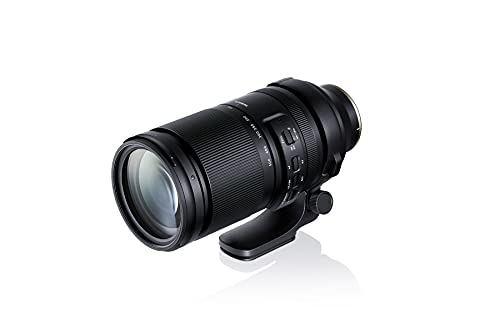
Tamron 150-500mm f/5-6.7 Di III VXD Lens
Best for: distant wildlife and sports photography
- Lens Mount
- Sony E
- Focal Length
- 150-500mm
- Maximum Aperture
- f/5-6.7
- Sensor Format
- Full-Frame
- Color
- Black
- Dimensions
- 8.3 × 3.7 × 3.7 inches
This Tamron lens offers a 150-500mm focal range for Sony E-mount full-frame cameras. It reaches 225-750mm equivalent on APS-C bodies. The design includes VC image stabilization with three modes. Optical elements reduce chromatic aberration. It weighs 6 pounds and measures 8.3 inches long. This tool suits photographers needing long reach for wildlife or sports.
Pros
- 150-500mm versatile ultra telephoto zoom range
- VC image stabilization with standard, panning, and framing priority modes
- XLD, LD, and GM glass elements reduce color fringing and distortion
- Rotating Arca-type tripod mount for stable support
Cons
- Heavy 6-pound build requires sturdy support
- Slow f/5-6.7 maximum aperture limits low-light performance
- Long 8.3-inch length affects portability
Good fit if
- You shoot wildlife or sports from a distance
- You use a Sony E-mount full-frame camera
- You prioritize reach over low-light speed
Skip if
- You need a compact travel lens
- You require fast autofocus in dim light
- You shoot handheld in low-light conditions
Verdict: Tamron 150-500mm f/5-6.7 Sony E delivers essential reach for distant subjects. It fits photographers who can manage its weight for sharp, long-range shots.

Panasonic Lumix G Vario 45-200mm f/4.0-5.6
Best for: portable telephoto reach on Micro Four Thirds
- Lens Mount
- Micro Four Thirds
- Focal Length
- 45-200 mm
- Maximum Aperture
- f/4.0-5.6
- Sensor Format
- Micro Four Thirds
- Image Stabilization
- MEGA OPTICAL I.S.
- Minimum Focusing Distance
- 1.00 m
This Panasonic lens covers 45-200mm on Micro Four Thirds cameras. It features MEGA OPTICAL I.S. to reduce blur from hand movement, which helps at longer focal lengths. The maximum aperture ranges from f/4.0 to f/5.6. It weighs 13.4 ounces and focuses down to 1.00 meter. You get a compact tool for telephoto work. The 52mm filter size adds to its portability.
Pros
- Built-in MEGA OPTICAL I.S. reduces camera shake
- Lightweight at 13.4 ounces
- Compact 45-200mm focal range
- 52mm filter thread
Cons
- Maximum aperture narrows to f/5.6 at 200mm
- Minimum focusing distance is 1.00 meter
- No weather sealing mentioned in data
Good fit if
- You need a lightweight telephoto zoom for Micro Four Thirds
- You value optical image stabilization for handheld shooting
- You want a compact lens for travel
Skip if
- You shoot full-frame cameras
- You require fast apertures for low light
- You need close-up macro capabilities
Verdict: Panasonic Lumix G 45-200mm Micro Four Thirds Lens offers a balanced telephoto range with stabilization. It suits Micro Four Thirds users who prioritize portability and reach over speed.

ZEISS Touit 1.8/32 Lens for Sony E-Mount
Best for: Sony E-mount users seeking sharp primes
- Lens Mount
- Sony E-Mount
- Focus Type
- Autofocus
- Color
- Black
- Dimensions
- 2.83 × 2.95 × 2.95 inches
- Weight
- 7.05 ounces
The Zeiss Touit 32mm f/1.8 is a prime lens for Sony E-mount mirrorless cameras. It features a constant f/1.8 aperture and a 32mm focal length. The lens uses T anti-reflective coating and aspherical elements to reduce aberrations. It weighs 7.05 ounces and measures 2.95 by 2.95 by 2.83 inches. This compact optic suits users who want sharp images and smooth autofocus in a small package.
Pros
- Constant f/1.8 maximum aperture
- T anti-reflective coating on all surfaces
- Aspherical lens design reduces spherical aberration
- Floating element design minimizes optical aberrations
- Compact dimensions of 2.95 x 2.95 x 2.83 inches
Cons
- Fixed focal length limits zoom flexibility
- No image stabilization listed in specifications
- Autofocus mechanism may be slower than modern internal focusing designs
Good fit if
- You prefer prime lenses for sharper images
- You shoot with Sony E-mount cameras
- You value compact and lightweight optics
Skip if
- You need a zoom range for versatility
- You require built-in image stabilization
- You use camera mounts other than Sony E
Verdict: Zeiss Touit 32mm f/1.8 delivers high contrast and sharpness for Sony E-mount users who prioritize image quality and portability over zoom flexibility.

Sony FE 90mm F2.8 Macro G OSS
Best for: full-frame macro photography requiring high resolution
- Lens Mount
- E-mount
- Focal Length
- 90 mm
- Maximum Aperture
- F2.8
- Sensor Format
- 35mm full-frame
- Focus Type
- Manual/auto focus, DDSSM
- Image Stabilization
- Optical Steady Shot
This 90mm lens is built for 35mm full-frame E-mount cameras. It offers 1:1 magnification at a minimum focus distance of 0.92 feet. The f/2.8 aperture allows for sharp images with beautiful background separation. Optical Steady Shot helps stabilize handheld shots. The Direct Drive SSM motor provides quiet and precise focusing. It is ideal for photographers who need high-resolution macro capabilities.
Pros
- 1.0x maximum magnification ratio for life-size detail
- f/2.8 maximum aperture with 9-blade circular diaphragm
- Optical Steady Shot image stabilization for handheld use
- Direct Drive SSM motor for quiet, fast focusing
Cons
- Heavier at 1.33 pounds compared to standard zooms
- Fixed focal length limits framing flexibility
- Requires full-frame E-mount cameras
Good fit if
- You need true 1:1 macro magnification for detailed subjects
- You shoot with full-frame Sony E-mount cameras
- You value sharp corner-to-corner resolution
Skip if
- You only use APS-C cameras and want lighter gear
- You need a zoom lens for versatile framing
- You require a very compact and lightweight setup
Verdict: Sony FE 90mm f/2.8 Macro G OSS delivers professional-grade macro performance with excellent sharpness and stabilization. It fits photographers who prioritize image quality and working distance over portability and zoom flexibility.
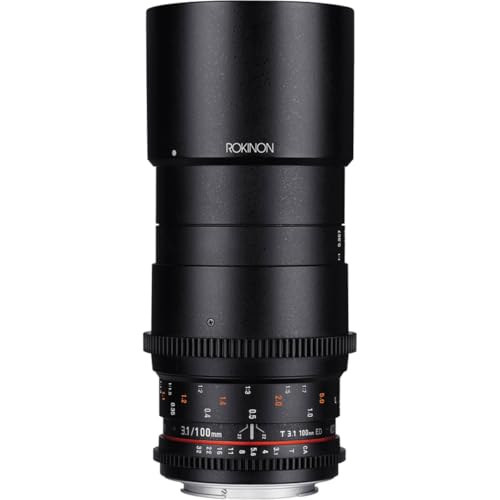
Rokinon Cine DS 100mm T3.1 Macro Lens
Best for: manual focus video and macro
- Lens Mount
- Micro Four Thirds
- Focal Length
- 100mm
- Maximum Aperture
- T3.1
- Sensor Format
- Full Frame
- Minimum Focusing Distance
- 1.0 ft.
- Color
- Black
The Rokinon Cine DS 100mm T3.1 is a telephoto macro lens designed for Micro Four Thirds cameras. It features a 100mm focal length and a constant T3.1 aperture. The lens includes 15 glass elements in 12 groups. It offers a minimum focusing distance of 1.0 ft. This lens suits video creators who need precise manual focus control and consistent exposure settings across their shots.
Pros
- 100mm focal length provides telephoto reach
- Constant T3.1 aperture for consistent exposure
- 1.0 ft minimum focusing distance for macro work
- 15 glass elements in 12 groups for image quality
- Unified gears for follow focus systems
Cons
- Manual focus only
- No image stabilization listed
- Heavier at 1.6 pounds
Good fit if
- You shoot video with manual focus rigs
- You need a dedicated macro lens
- You use Micro Four Thirds cameras
Skip if
- You need autofocus
- You require image stabilization
- You prefer lightweight gear
Verdict: Rokinon Cine DS 100mm T3.1 Lens is a solid manual focus option for Micro Four Thirds users who prioritize optical quality and follow focus compatibility over convenience features like autofocus or stabilization.

Voigtlander Nokton 10.5mm f/0.95 Lens
Best for: Low-light manual focus photography on Micro 4/3
- Lens Mount
- Micro 4/3 Mount
- Focal Length
- 10.5mm
- Maximum Aperture
- f/0.95
- Focus Type
- Manual Focus
- Dimensions
- 3.46 × 2.99 × 3.46 inches
- Weight
- 1.65 pounds
The Voigtlander Nokton 10.5mm f/0.95 is a manual focus lens for Micro 4/3 mounts. It offers an f/0.95 maximum aperture, the fastest for this focal length. The 10.5mm focal length provides a 21mm equivalent field of view on full-frame sensors. You get selective aperture control for video or stills. It weighs 1.65 pounds and measures 3.46 inches in length. This lens suits photographers who prioritize low-light performance and creative depth of field.
Pros
- Fastest 10.5mm Micro 4/3 lens with f/0.95 aperture
- Manual focus allows selective aperture control
- 21mm equivalent field of view on full-frame format
Cons
- Manual focus only, no autofocus motor
- Heavy at 1.65 pounds for a compact lens
- No image stabilization listed in specifications
Good fit if
- You need the widest possible aperture for low-light shooting
- You prefer manual focus for creative control
- You shoot with Micro 4/3 cameras
Skip if
- You require autofocus for fast action
- You want a lightweight travel lens
- You shoot with Sony E-mount or Canon RF cameras
Verdict: Voigtlander Nokton 10.5mm f/0.95 Manual Focus delivers exceptional low-light capability for Micro 4/3 users who value manual control. It fits those seeking extreme aperture performance over convenience or weight savings.
Specifications side by side
| Spec | Canon RF-S 55-210mm F5-7.1 IS STM Telephoto Lens | Canon RF 75-300mm F4-5.6 Telephoto Zoom Bundle | Tamron 150-500mm f/5-6.7 Di III VXD Lens | Panasonic Lumix G Vario 45-200mm f/4.0-5.6 | ZEISS Touit 1.8/32 Lens for Sony E-Mount | Sony FE 90mm F2.8 Macro G OSS | Rokinon Cine DS 100mm T3.1 Macro Lens | Voigtlander Nokton 10.5mm f/0.95 Lens |
|---|---|---|---|---|---|---|---|---|
| Lens Mount | Canon RF | Canon RF | Sony E | Micro Four Thirds | Sony E-Mount | E-mount | Micro Four Thirds | Micro 4/3 Mount |
| Focal Length | 55-210mm | 75-300mm | 150-500mm | 45-200 mm | not specified | 90 mm | 100mm | 10.5mm |
| Maximum Aperture | F5-7.1 | f/4-5.6 | f/5-6.7 | f/4.0-5.6 | not specified | F2.8 | T3.1 | f/0.95 |
| Sensor Format | APS-C | Full-frame and APS-C | Full-Frame | Micro Four Thirds | not specified | 35mm full-frame | Full Frame | not specified |
| Focus Type | STM | DC autofocus motor | not specified | not specified | Autofocus | Manual/auto focus, DDSSM | not specified | Manual Focus |
| Image Stabilization | Optical image stabilization | not specified | not specified | MEGA OPTICAL I.S. | not specified | Optical Steady Shot | not specified | not specified |
| Minimum Focusing Distance | 28.7 in./0.73m. | 4.9 feet | not specified | 1.00 m | not specified | 0.92 ft (0.28 m) | 1.0 ft. | not specified |
| Configuration | not specified | Bundle | not specified | not specified | not specified | not specified | not specified | not specified |
| Included Lens | 55-210mm Lens | not specified | not specified | not specified | not specified | not specified | not specified | not specified |
| Color | Black | not specified | Black | Black | Black | Black | Black | not specified |
| Aperture | not specified | not specified | not specified | f/4.0 | not specified | f/2.8 | not specified | f/0.95 |
| Lens Type | not specified | Zoom | not specified | not specified | not specified | Macro | Macro | not specified |
| Dimensions | 4 × 4.09 × 4.09 inches | 5.75 × 4.09 × 4.09 inches | 8.3 × 3.7 × 3.7 inches | 3.94 × 2.76 × 2.76 inches | 2.83 × 2.95 × 2.95 inches | 5.16 × 3.11 × 3.11 inches | 5.82 × 3.2 × 3.2 inches | 3.46 × 2.99 × 3.46 inches |
| Weight | 14.4 ounces | 2.32 pounds | 6 pounds | 13.4 ounces | 7.05 ounces | 1.33 pounds | 1.6 pounds | 1.65 pounds |
| Model | 5824C002 | 7155C005_AG9RE_1 | AFA057S-700 | H-FS045200 | 000000-2030-678 | SEL90M28G | DS100M-MFT | 10.5mm F/0.95 Mirrorless |
| Size | not specified | not specified | not specified | 45-200MM | 1.8/32 | 4.70 | 5.10 | not specified |
If you need continuous monitoring instead of interchangeable lenses, you can review sensor specs in the security camera buying guide.
Frequently asked questions
Which mirrorless lens is best for lightweight telephoto reach on Canon APS-C?
The Canon RF-S 55-210mm F5-7.1 IS STM is the top choice for compact reach. It weighs only 14.4 ounces and measures 4 inches in length. This lens fits users who prioritize portability and image stabilization over low-light speed. It is designed specifically for APS-C sensors.
How does the Sony E-mount macro lens compare in weight to standard zooms?
The Sony FE 90mm f/2.8 Macro G OSS weighs 1.33 pounds. This is heavier than compact zooms like the Canon RF-S 55-210mm, which weighs 14.4 ounces. The macro lens offers professional-grade sharpness and stabilization. It suits photographers who value image quality and working distance over extreme portability.
What is the maximum focal length available for distant wildlife photography?
The Tamron 150-500mm f/5-6.7 Di III VXD offers the longest reach at 500mm. It weighs 6 pounds and measures 8.3 inches in length. This lens is ideal for distant wildlife and sports. You must manage its significant weight to achieve sharp, long-range shots on Sony E-mount bodies.
Which lens provides the widest aperture for low-light manual focus work?
The Voigtlander Nokton 10.5mm f/0.95 delivers exceptional low-light capability with an f/0.95 aperture. It is designed for manual focus photography on Micro 4/3 systems. This lens weighs 1.65 pounds. It fits users who value extreme aperture performance and manual control over convenience features like autofocus.
Are there telephoto options for Micro Four Thirds cameras?
Yes, the Panasonic Lumix G Vario 45-200mm f/4.0-5.6 is a portable option. It weighs 13.4 ounces and features a balanced telephoto range with stabilization. This lens suits users who prioritize reach and portability. It is designed specifically for Micro Four Thirds sensor formats.
What are the dimensions of the Canon RF 75-300mm telephoto zoom?
The Canon RF 75-300mm measures 5.75 inches in length and 4.09 inches in both width and height. It weighs 2.32 pounds. This bundle offers solid reach for Canon users who need lightweight telephoto performance. It fits photographers who prioritize portability over speed and low-light capability.
Is there a sharp prime lens for Sony E-mount users?
The ZEISS Touit 32mm f/1.8 is a sharp prime option for Sony E-mount. It weighs just 7.05 ounces and measures 2.83 inches in length. This lens delivers high contrast and sharpness. It suits users who prioritize image quality and portability over zoom flexibility.
Which lens is recommended for manual focus video and macro work?
The Rokinon Cine DS 100mm T3.1 is a solid manual focus choice. It is designed for Micro Four Thirds systems and weighs 1.6 pounds. This lens prioritizes optical quality and follow focus compatibility. It fits users who need macro capabilities without autofocus or stabilization features.