Full Frame vs Micro Four Thirds Mirrorless Cameras: Which Should You Buy?
As an Amazon Associate we earn from qualifying purchases. Links on this page are affiliate links.
Choosing between a full frame vs micro four thirds mirrorless camera depends on your priorities. Both the Canon EOS R8 and OM System OM-3 deliver high-resolution images and advanced autofocus systems. They share modern mirrorless designs with electronic viewfinders and vari-angle screens. The main difference lies in sensor size. Full frame sensors generally offer wider dynamic range, while Micro Four Thirds cameras provide superior in-body stabilization and compact lens kits. Your choice hinges on whether you value sensor size or portability.
Key differences
| Aspect | Canon EOS R8 Full-Frame Camera | OM System OM-3 Micro Four Thirds Kit |
|---|---|---|
| Sensor Format | Full-frame | Micro Four Thirds |
| Configuration | Body Only | Lens Kit |
| Resolution | 24.2 MP | 20 MP |
| Image Stabilization | not listed | IBIS up to 7.5 EV Steps |
| Video Resolution | 4K up to 60 fps | not listed |
| Color | Black | Silver |
Which one should you choose?
Choose Canon EOS R8 Full-Frame Camera if
- You want the larger full-frame sensor for better low-light performance and dynamic range.
- You prefer a body-only setup to choose your own lenses.
- You need uncropped 4K video recording up to 60 fps.
Choose OM System OM-3 Micro Four Thirds Kit if
- You need strong in-body image stabilization for handheld shooting.
- You want a complete kit with a lens included.
- You value internal ND filters for long exposure shots in daylight.
Verdict: The Canon EOS R8 suits those prioritizing sensor size and high-resolution video. The OM System OM-3 is better for photographers who need robust stabilization and a ready-to-shoot lens kit. Select based on whether you value sensor dimensions or integrated stabilization features.
R8 vs OM-3 Comparison
Sensor Format
The Canon EOS R8 uses a full-frame sensor, while the OM System OM-3 uses a Micro Four Thirds sensor. Full-frame sensors are generally larger, which often helps with light gathering and depth of field control. The R8’s 24.2-megapixel full-frame sensor captures images with wide dynamic range and low noise at high ISO speeds. The OM-3 features a 20-megapixel stacked BSI Live MOS sensor. This smaller sensor format offers a different field of view equivalent when using lenses. You need to decide if the larger sensor size of the R8 matters more than the compact nature of the Micro Four Thirds system for your specific shooting needs.
Configuration
You are comparing a body-only option against a kit configuration. The Canon EOS R8 is listed as a body-only camera in this data. This means you must purchase lenses separately, giving you total freedom to choose glass that fits your budget and style. The OM System OM-3 is available in a kit with the M.Zuiko Digital ED 12-45mm F4.0 PRO lens. This kit approach provides immediate usability right out of the box. If you prefer a complete package to start shooting immediately, the OM-3 kit offers that convenience. If you already own lenses or want to curate your own setup, the R8 body-only approach is more flexible.
Video Resolution
Video capabilities differ between these two models. The Canon EOS R8 records uncropped 4K video at up to 60 fps, oversampled from 6K for improved detail. It also supports Full HD at up to 180 fps for slow-motion effects. The R8 includes Canon Log 3 and HDR PQ for professional color grading. The OM System OM-3 data does not list specific video resolution or frame rate specs. While the OM-3 is capable of video, the R8 provides explicit high-frame-rate and high-resolution options. If 4K 60p or slow-motion is a priority, the Canon offers verified specs that meet those requirements clearly.
Image Stabilization
In-body image stabilization is a key feature for handheld shooting. The OM System OM-3 offers IBIS up to 7.5 EV steps. This high level of stabilization helps you capture sharp images in low light or while panning. It allows for longer shutter speeds without blur. The Canon EOS R8 data does not list specific IBIS EV steps. While Canon cameras often have stabilization, the OM-3 explicitly highlights its 7.5 EV class-leading stabilization. If you frequently shoot handheld in challenging light or without a tripod, the OM-3’s robust stabilization system provides a clear advantage for keeping your images sharp.
Autofocus System
Autofocus performance is critical for capturing fast action. The Canon EOS R8 features Dual Pixel CMOS AF II with 1,053 AF zones covering 100% of the frame. It uses deep learning to detect people, animals, vehicles, aircraft, trains, and horses. The OM System OM-3 data does not specify its autofocus system details or zone count. The R8’s extensive subject detection and wide coverage area provide verified reliability for tracking moving subjects. If you shoot sports, wildlife, or active children, the Canon’s detailed autofocus specs suggest a robust tracking system that you can rely on for consistent focus.
Which Mirrorless Camera Fits Your Needs
You want lightweight full-frame performance
The Canon EOS R8 is the lightest full-frame RF mount mirrorless camera. It weighs just 2.15 pounds and measures 6 by 4 by 3 inches. This compact body makes it easy to carry. You get a 24.2-megapixel sensor and DIGIC X processor for high image quality. The dual pixel autofocus covers 100% of the frame for reliable subject detection.
You need built-in lens and stabilization
The OM System OM-3 comes with a 12-45mm lens included. It features a 20-megapixel stacked BSI Live MOS sensor. The camera offers image stabilization up to 7.5 EV steps. This helps you capture sharp images in low light. You also get Live ND filters for long exposure shots in daylight. The kit configuration provides a complete setup right out of the box.
You prioritize advanced video features
The Canon EOS R8 records uncropped 4K video at up to 60 fps. It oversamples from 6K for high detail. You can also shoot Full HD at 180 fps for slow motion. The camera supports Canon Log 3 and HDR PQ for professional color grading. It includes UVC and UAC support for webcam and streaming use. This makes it a versatile tool for video creators.
Quick picks
| # | Product | Best for | Price |
|---|---|---|---|
| 1 | Canon EOS R8 Full-Frame Camera | Travelers seeking full-frame quality in a compact body | Check price of Canon EOS R8 Full-Frame Camera on Amazon |
| 2 | OM System OM-3 Micro Four Thirds Kit | handheld stabilization and daylight long exposure | Check price of OM System OM-3 Micro Four Thirds Kit on Amazon |
The products compared
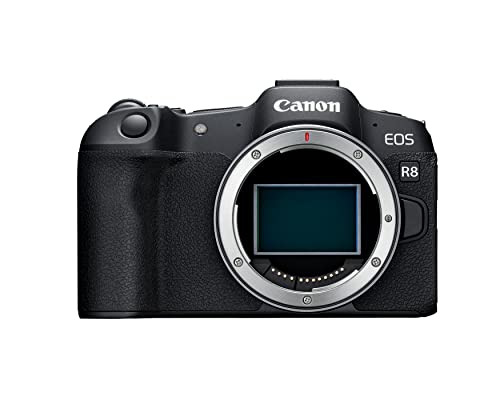
Canon EOS R8 Full-Frame Camera
Best for: Travelers seeking full-frame quality in a compact body
- Sensor Format
- Full Frame (what this guide is about)
- Sensor Resolution
- 24.2 MP
- Autofocus System
- Dual Pixel CMOS AF II (1,053 AF zones)
- Video Resolution
- 4K up to 60 fps, Full HD up to 180 fps
- Image Processor
- DIGIC X
- Configuration
- Body Only
View on Amazon: Canon EOS R8 Full-Frame Camera Affiliate link
The Canon EOS R8 is a compact full-frame mirrorless camera designed for photographers who want high image quality without heavy gear. It features a 24.2 MP sensor and DIGIC X processor for clean images at high ISO speeds. You get uncropped 4K video at 60 fps and a robust Dual Pixel CMOS AF II system. This body-only model offers a vari-angle LCD and OLED viewfinder, making it a practical choice for travel and everyday shooting.
Pros
- Full-frame 24.2 MP sensor for superior low-light performance
- DIGIC X processor enables fast subject detection and low noise
- Uncropped 4K video recording at up to 60 fps
- Dual Pixel CMOS AF II covers 100% of the frame
Cons
- Heavier than Micro Four Thirds competitors at 2.15 pounds
- No in-body image stabilization listed in specifications
- Single SD card slot limits workflow redundancy
Good fit if
- You prioritize full-frame image quality in a portable body
- You shoot fast-moving subjects like vehicles or aircraft
- You need reliable autofocus for both photos and video
Skip if
- You require a lighter camera under two pounds
- You need in-body image stabilization for handheld video
- You prefer a system with smaller lenses and bodies
Verdict: Canon EOS R8 Full-Frame Mirrorless Camera is a lightweight entry into full-frame photography, ideal for travelers who need strong autofocus and 4K video without the bulk of larger DSLRs or full-frame bodies.

OM System OM-3 Micro Four Thirds Kit
Best for: handheld stabilization and daylight long exposure
- Sensor Format
- Micro Four Thirds (what this guide is about)
- Sensor Resolution
- 20MP
- Image Stabilization
- IBIS up to 7.5 EV Steps
- Configuration
- Lens Kit
- Color
- Silver
- Dimensions
- 11.3 × 7 × 5.25 inches
View on Amazon: OM System OM-3 Micro Four Thirds Kit Affiliate link
The OM-3 is a Micro Four Thirds camera with a 20MP stacked BSI sensor. It features IBIS up to 7.5 EV steps for sharp handheld shots. Internal Live ND and Live GND filters allow long exposures in daylight. The Super Sonic Wave Filter keeps the sensor clean. This kit includes a 12-45mm F4 lens. It suits photographers who need portability and advanced stabilization.
Pros
- 20MP stacked BSI Live MOS sensor
- IBIS up to 7.5 EV steps
- Internal Live ND and Live GND filters
- Super Sonic Wave Filter for dust reduction
Cons
- Micro Four Thirds sensor is smaller than full frame
- 20MP resolution is lower than many modern competitors
- Heavier build at 3.34 pounds
Good fit if
- You prioritize image stabilization over sensor size
- You want internal neutral density filters for daylight long exposures
- You prefer a compact lens kit setup
Skip if
- You need full-frame sensor performance
- You require high-resolution imaging above 20MP
- You want the lightest possible camera body
Verdict: OM System OM-3 Micro Four Thirds delivers strong stabilization and unique filter options for its class. It fits photographers who value handheld sharpness and compact gear over maximum sensor size.
Specifications side by side
| Spec | Canon EOS R8 Full-Frame Camera | OM System OM-3 Micro Four Thirds Kit |
|---|---|---|
| Sensor Format | Full-frame | Micro Four Thirds |
| Sensor Resolution | 24.2 MP | 20MP |
| Autofocus System | Dual Pixel CMOS AF II (1,053 AF zones) | not stated |
| Image Stabilization | not stated | IBIS up to 7.5 EV Steps |
| Video Resolution | 4K up to 60 fps, Full HD up to 180 fps | not stated |
| Image Processor | DIGIC X | not stated |
| Configuration | Body Only | Lens Kit |
| Resolution | 24.2 MP | not stated |
| Color | Black | Silver |
| Lens Mount | Canon RF Mount | not stated |
| Dimensions | 3 × 6 × 4 inches | 11.3 × 7 × 5.25 inches |
| Weight | 2.15 pounds | 3.34 pounds |
| Model | EOS R8 | OM-3 |
Frequently asked questions
Is a full frame camera better for low light?
Yes, full frame sensors generally handle low light better. The larger sensor area gathers more light than smaller formats. This often results in cleaner images with less noise in dim conditions. You get stronger performance when shooting indoors or at night without needing high ISO settings.
Does a smaller sensor mean worse image quality?
Not necessarily. Image quality depends on many factors beyond sensor size. The OM System OM-3 uses a Micro Four Thirds sensor but still delivers high-resolution images. Modern sensors are very efficient. You can achieve excellent sharpness and color accuracy with smaller formats if you use good lenses.
Which system has better lens selection?
Both systems have extensive lens options. Full frame systems like Canon RF mount offer many high-quality lenses. Micro Four Thirds also has a wide range of compact and versatile optics. Your choice should depend on the specific focal lengths and features you need for your photography style.
Is full frame worth the extra weight?
It depends on your mobility needs. Full frame cameras often have larger bodies. However, some models like the Canon EOS R8 are surprisingly compact. They weigh just 2.15 pounds. If you prioritize portability, check the specific dimensions. Some full frame options are lighter than you might expect.
Can Micro Four Thirds do professional work?
Yes, Micro Four Thirds cameras are used professionally. The OM System OM-3 offers strong stabilization and unique filter options. These features help in challenging shooting conditions. Many photographers use this format for travel and wildlife. The system balances performance with compact size effectively for various professional tasks.
Which is better for video recording?
Both formats support high-quality video recording. The Canon EOS R8 records 4K video. It provides strong autofocus for moving subjects. Micro Four Thirds cameras also offer excellent video capabilities. Your choice depends on the specific video features you need, such as resolution, frame rates, and stabilization options.
Do I need a full frame for portraits?
Full frame sensors can offer shallower depth of field. This helps isolate subjects in portraits. However, lens choice matters more than sensor size. A fast lens on a Micro Four Thirds camera can also create nice background blur. Consider your typical shooting distance and desired look before deciding.